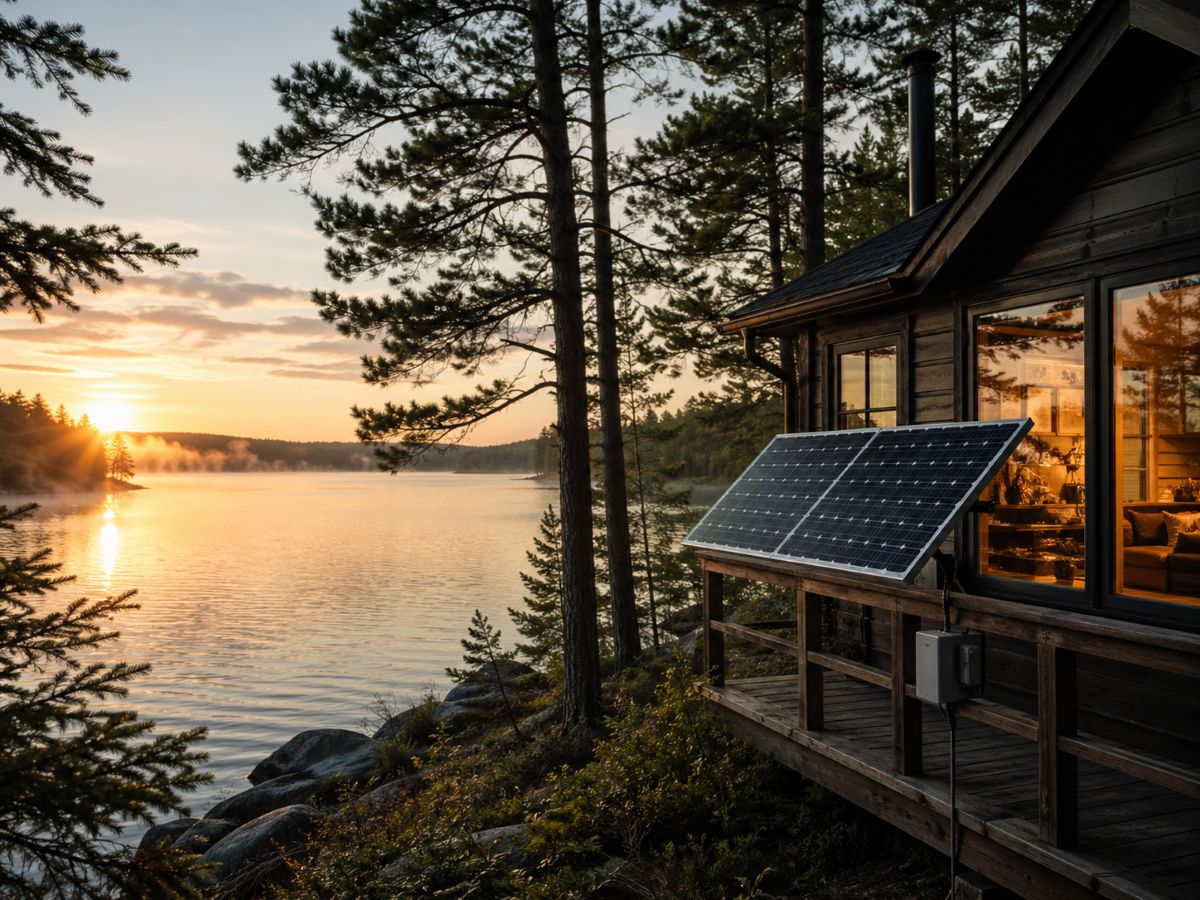


For many cottage owners, power is either limited, expensive, or unreliable. Running new electrical service can cost thousands. Generators work, but they are loud, require fuel, and need regular maintenance.
That has more people asking a simple question: Can a small, plug-and-play solar system handle the basics?
The answer is yes—but with limits that are often glossed over.
What Is a Plug and Play Solar for Cabins System?

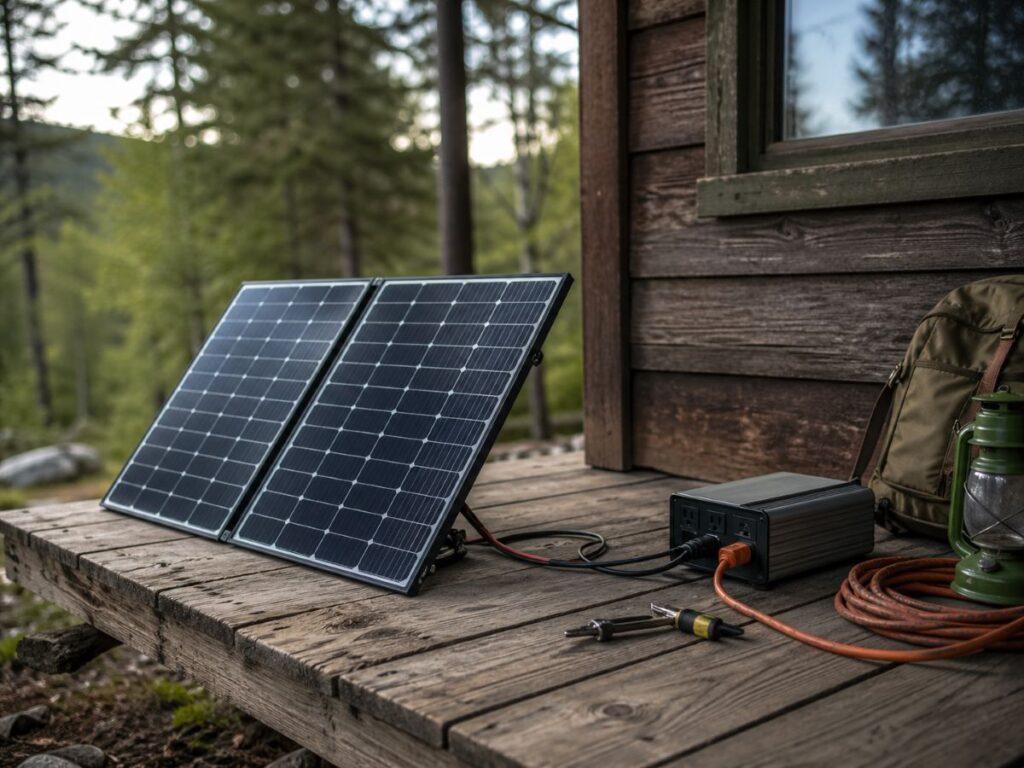
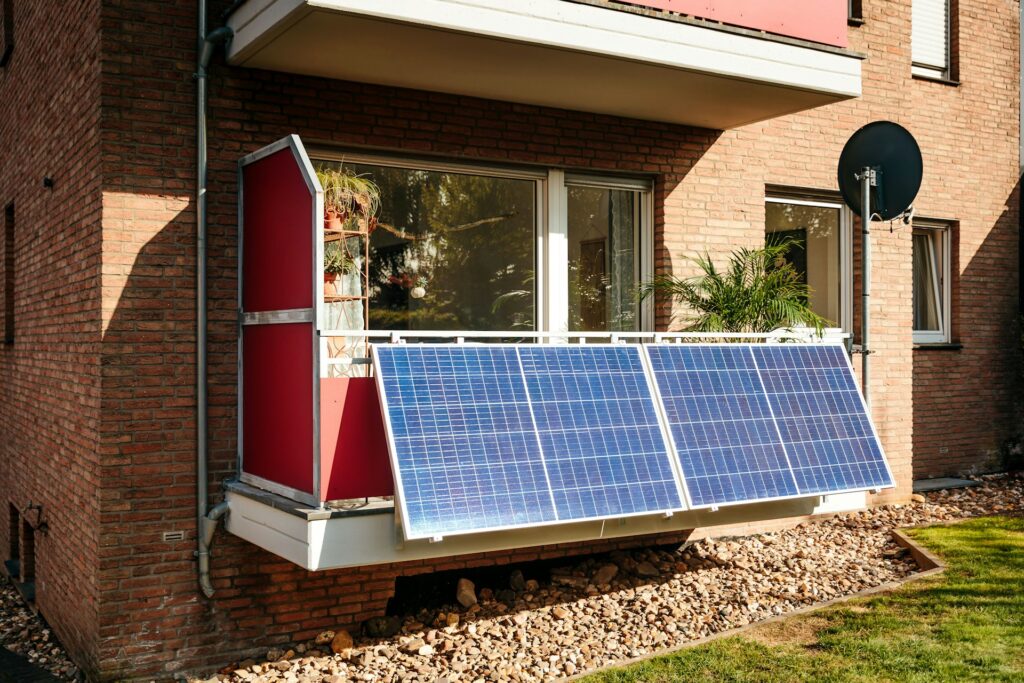
Plug-and-play solar—often called “balcony solar”—is a compact system designed to be simple:
- One or two solar panels
- A microinverter or portable power station
- A standard plug connection
In theory, you set the panels in the sun, plug the system into an outlet, and begin offsetting electricity use.
That simplicity is the appeal. But in the U.S., it is not always that straightforward.
What Can It Actually Power?
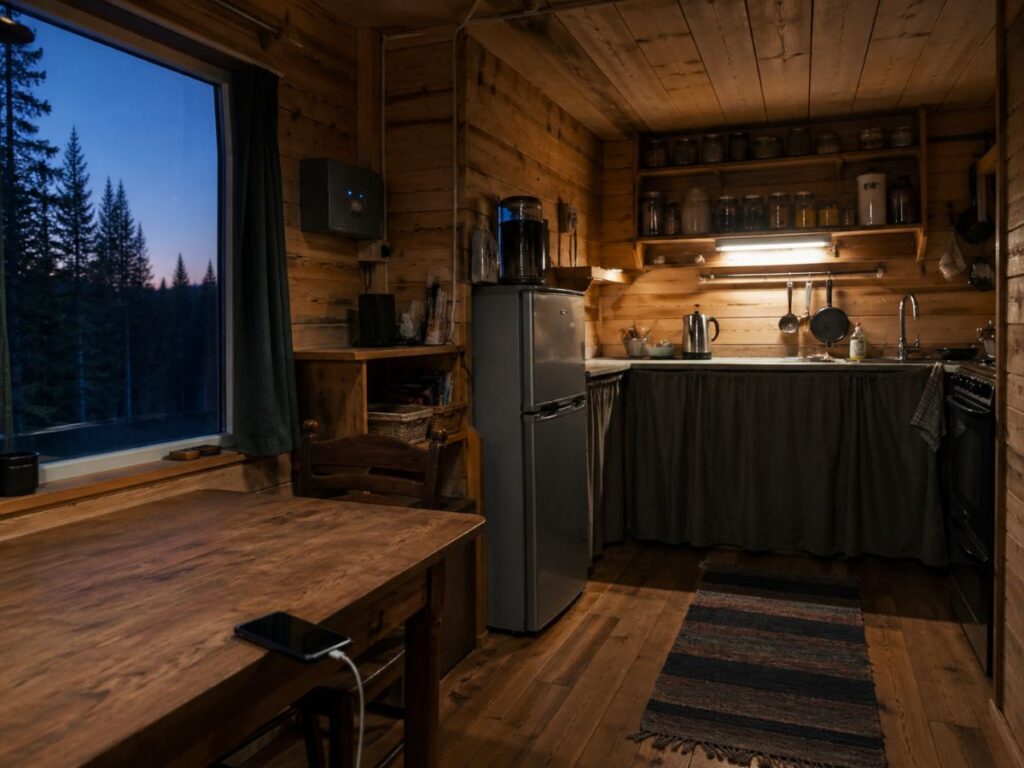
These systems are not designed to run an entire cabin. They are best used for small, consistent loads.
What works well:
- LED lighting
- Phone and laptop charging
- Wi-Fi routers
- Small fans
- Energy-efficient mini fridges
What does not:
- Electric water heaters
- Space heaters
- Air conditioning units
- Electric stoves or ovens
A typical entry-level system produces 300–800 watts under ideal conditions. That’s enough for essentials—but not for heavy demand.
Plug and Play Solar for Cabins Rules in the U.S. – Reality Check
Here is where many articles fall short.
In countries like Germany, plug-and-play solar systems are widely accepted. Homeowners can legally plug panels into a standard outlet with minimal restrictions.
In the U.S., the situation is different:
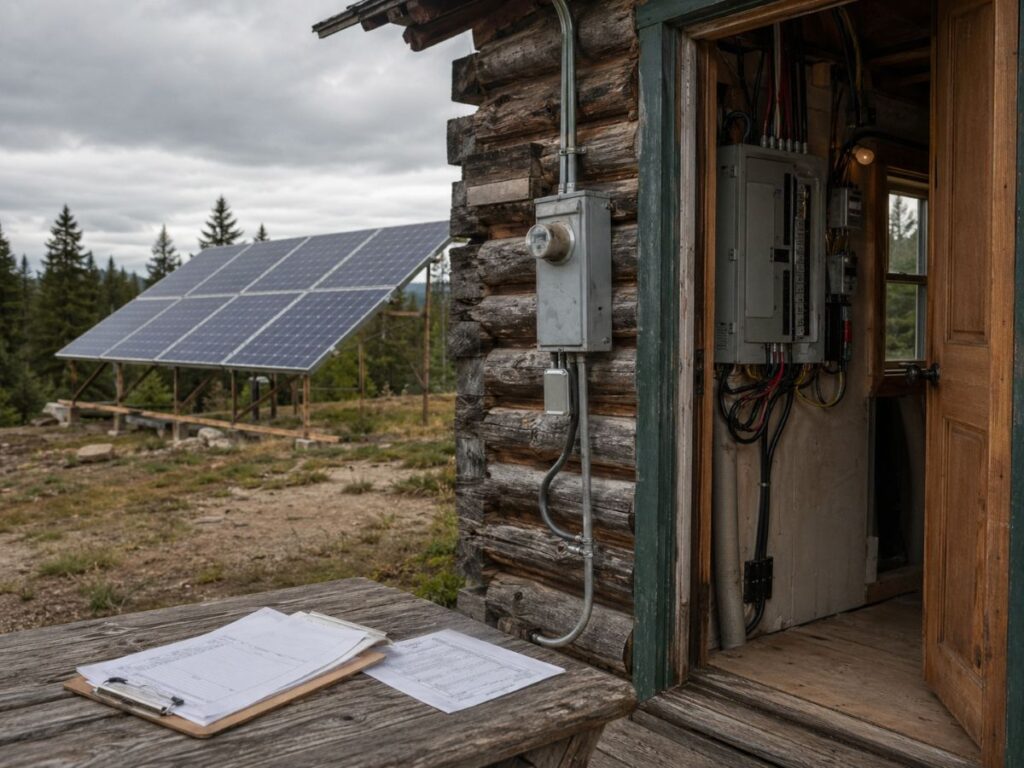
- Many utilities do not allow backfeeding power through a standard outlet
- Electrical codes often require a dedicated connection and inspection
- Permits may still be needed, even for small systems
In practical terms, that means true “plug it into the wall and go” setups can fall into a gray area.
Where these systems do make sense:
- Off-grid cabins
- Properties without utility connections
- Systems paired with battery storage instead of direct grid tie
If your cottage is on-grid, expect more rules.
Best Use Cases for Cottage Owners
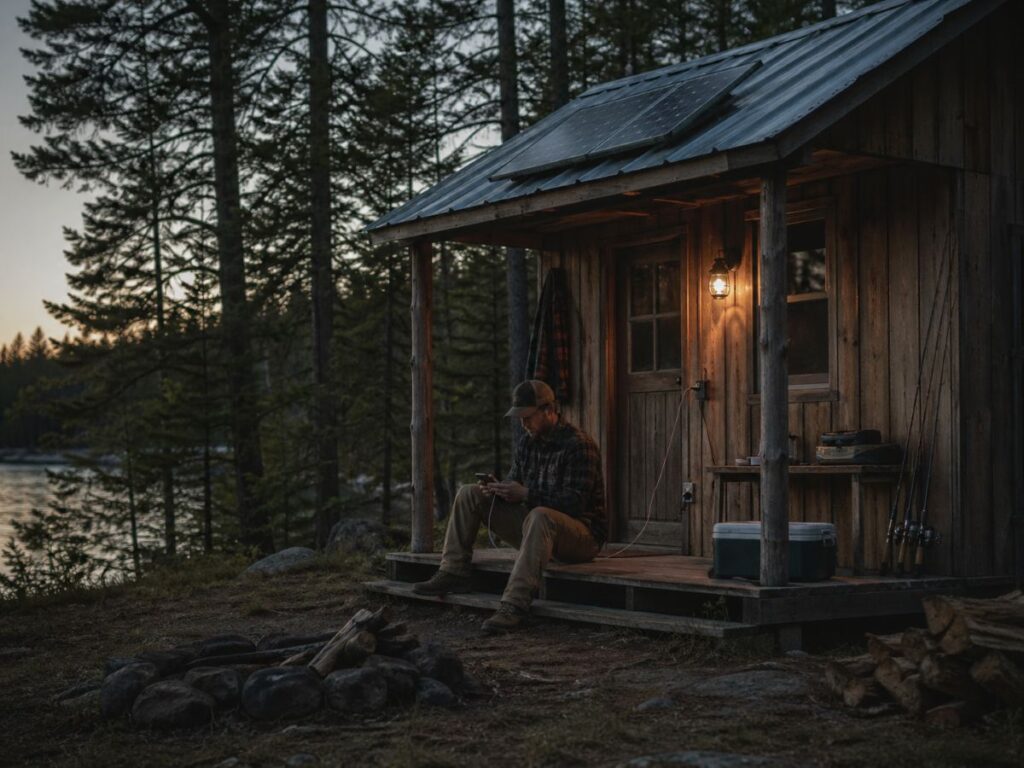
Plug-and-play solar works best when expectations are realistic.
Ideal scenarios:
- Seasonal cabins with light power needs
- Hunting or fishing camps
- Backup power during outages
- Supplemental power to reduce small loads
For a Michigan or Great Lakes cottage, this often means:
- Keeping lights and devices running
- Powering a small fridge
- Charging tools or batteries
It does not replace a full electrical system—but it can reduce dependence on one.
Plug and Play Solar for Cabins Cost Breakdown
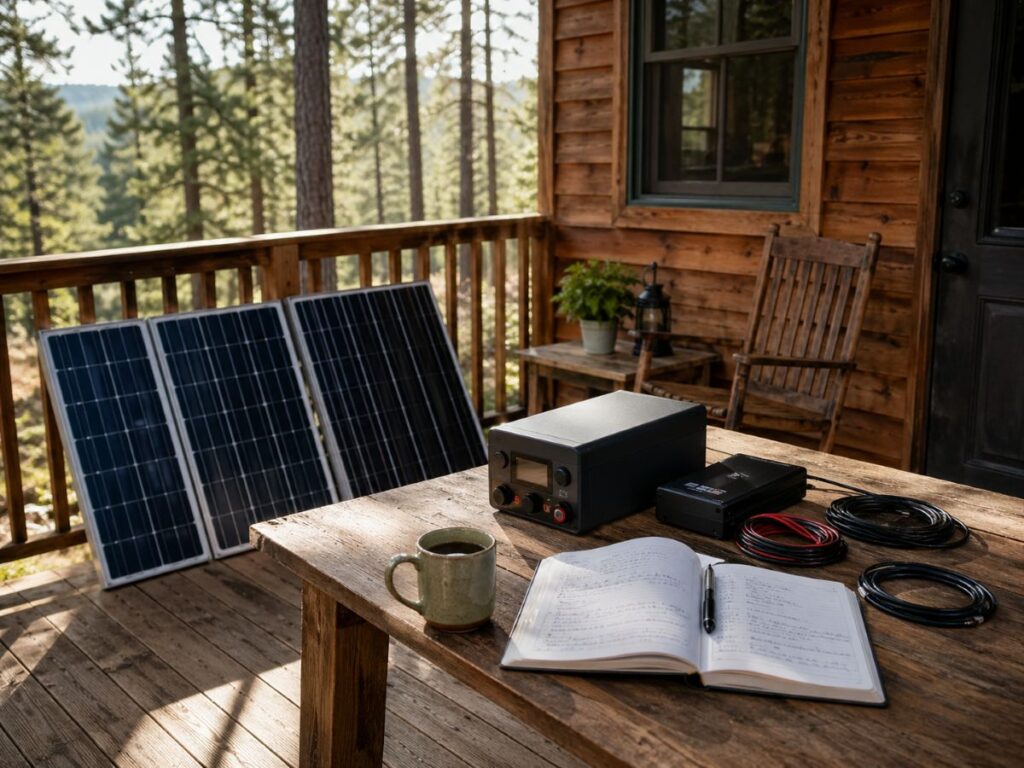
Pricing varies widely based on quality and storage.
Typical ranges:
- Basic panel + microinverter kit: $500–$1,200
- Portable power station + panels: $800–$2,500
- Battery expansion (optional): $300–$1,500
Battery systems add cost, but they solve a key problem: storing power for night use and avoiding code issues tied to grid connections.
Plug and Play Solar Panels On Amazon

Images on this page may contain affiliate links in which we may receive a commission. See our affiliate disclosure for details.
- Plug and Play Solar Panel Power with 800-Watt Solar Panels and 800-Watt Inverter; Simply Plug into Wall
- Jackery HomePower 3600 Plus Portable Power Station with 2x 200W Solar Panels, 3600W AC Output, 3584Wh LFP Solar Generator, Expandable up to 21kWh, Essential Home Backup for Home Use, Emergencies, RV
- Jackery Solar Generator 1000 v2 with 200W Solar Panel,1070Wh Portable Power Station LiFePO4 Battery,1500W AC/100W USB-C Output, 1Hr Fast Charge for Outdoor,Off-Grid Living,RV,Emergency
Pros and Cons
Pros
- Simple setup compared to full solar installs
- Lower upfront cost
- Portable and flexible
- Quiet alternative to generators
Cons
- Limited power output
- Legal and code restrictions in many U.S. areas
- Weather-dependent performance
- Not suitable for whole-cabin use
Plug and Play Solar for Cabins vs Generator – Practical Comparison
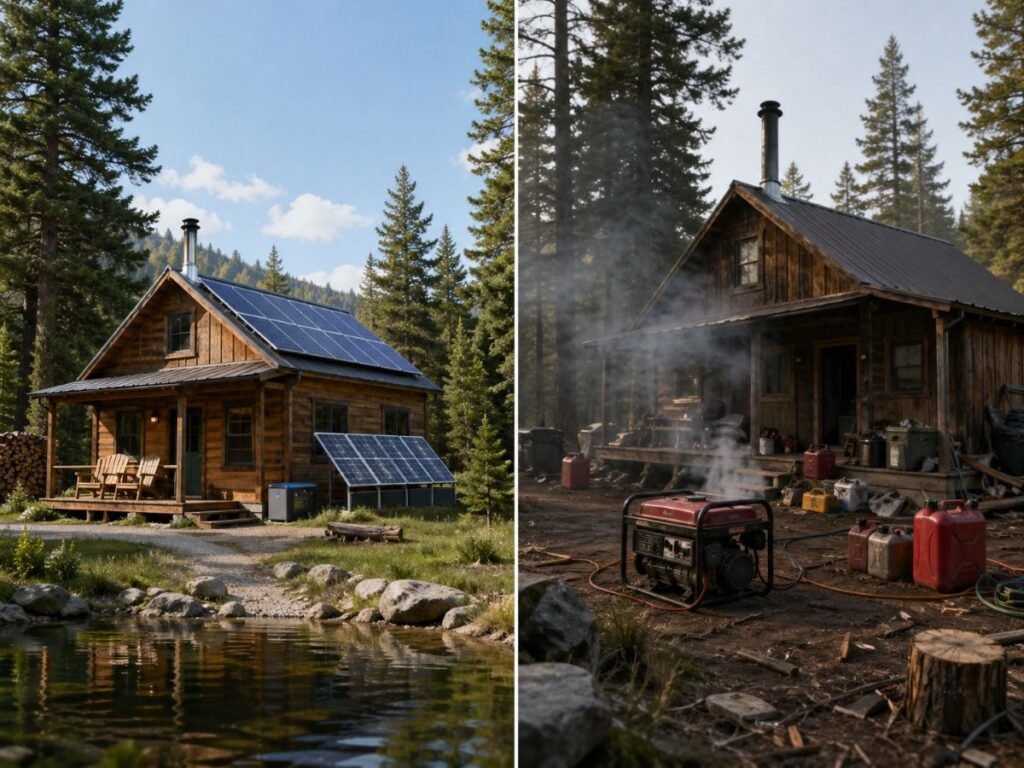
Many cottage owners still rely on gas generators. Here’s how small solar stacks up:
| Feature | Plug-and-Play Solar | Generator |
|---|---|---|
| Noise | Silent | Loud |
| Fuel | Free (sunlight) | Gas/propane required |
| Maintenance | Minimal | Ongoing |
| Power Output | Low to moderate | High |
| Reliability | Weather-dependent | Consistent |
The takeaway: solar is best for steady, low-demand use. Generators still win for high-load needs.
Common Mistakes to Avoid
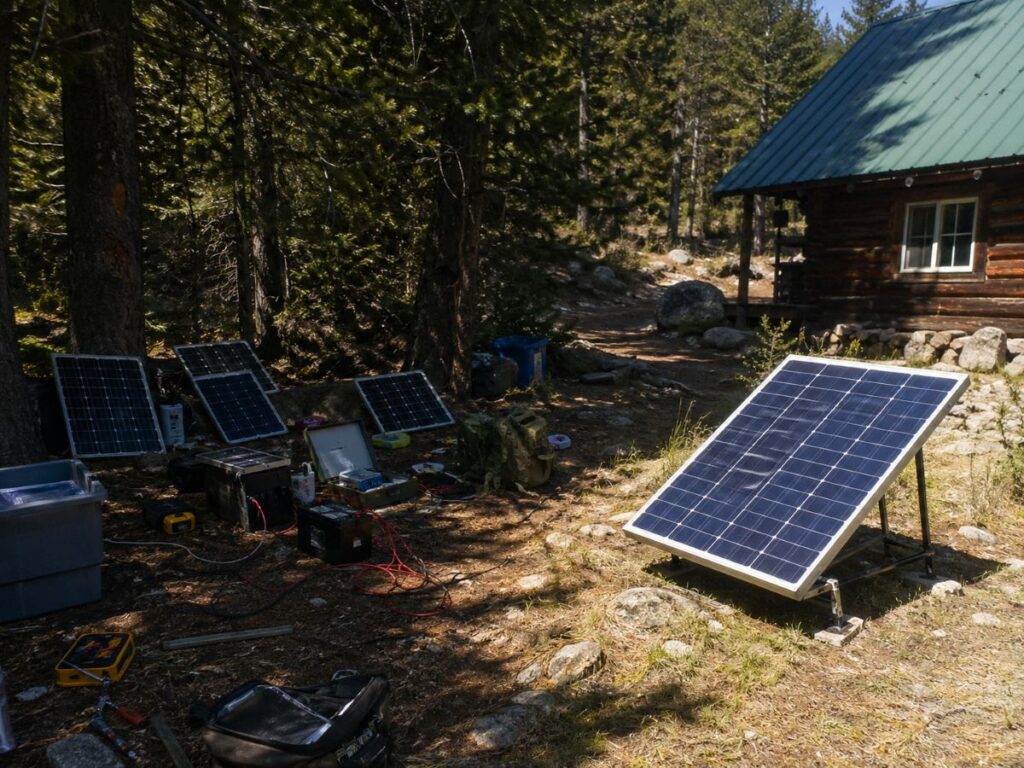
- Expecting to run an entire cabin on a small system
- Ignoring local electrical codes
- Skipping battery storage when needed
- Buying low-quality panels or inverters
A realistic plan prevents frustration.
Alternatives Worth Considering
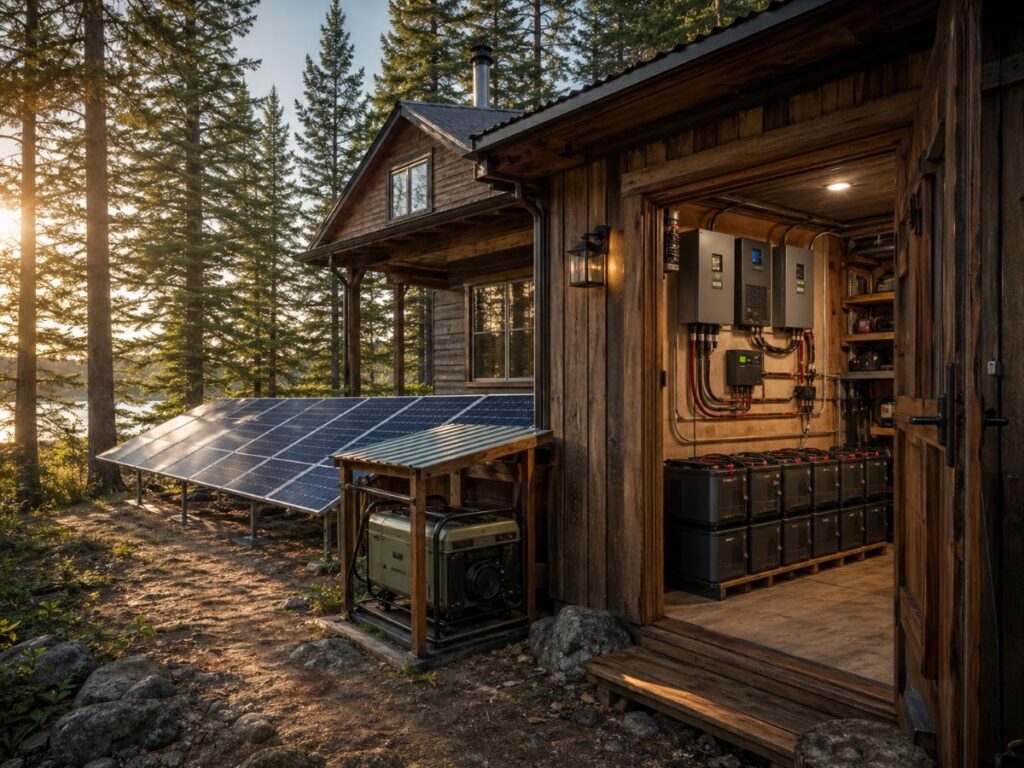
If plug-and-play solar feels too limited, there are other options:
- Small off-grid solar kits with proper wiring and battery banks
- Portable power stations (solar-ready, no wiring required)
- Hybrid systems that combine solar with generator backup
These options cost more but offer greater reliability and flexibility.
Can a plug and play solar system run a cabin?
A plug and play solar cabin system can power lights, small appliances, and devices, but it cannot run high-demand equipment like heating or air conditioning.
Are plug and play solar systems legal in the U.S.?
Rules vary. Many areas restrict plugging solar systems directly into outlets without permits or utility approval.
How much does a small solar system for a cabin cost?
Most plug and play solar cabin systems cost between $500 and $2,500 depending on size and battery storage.
Is solar better than a generator for a cabin?
Solar is quieter and requires less maintenance, but generators provide more power and work in all weather conditions.
Bottom Line
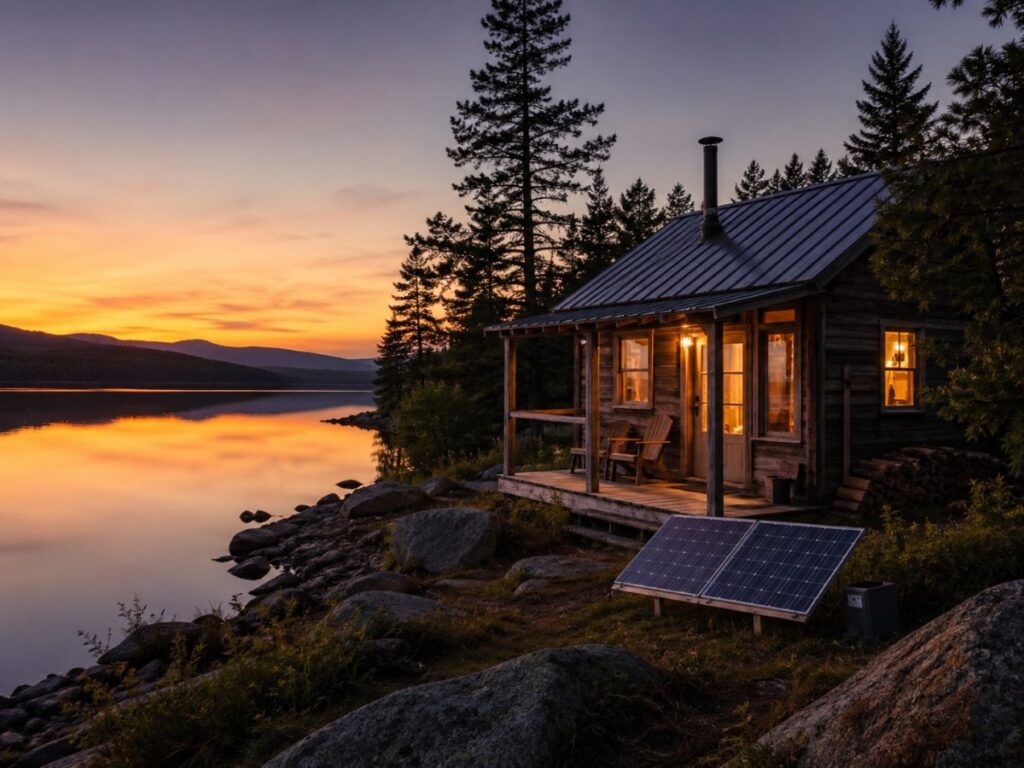
Plug-and-play solar can work for cottages and cabins—but only within clear limits.
It is best viewed as:
- A supplement, not a full solution
- A quiet, low-maintenance option for basic needs
- A practical tool for off-grid or lightly powered properties
For many cottage owners, that may be enough.
The key is understanding what the system can do—and what it cannot.