 by
by There is a predictable moment during every family cabin weekend. The cars have barely stopped rolling. Duffel bags are blocking the hallway. Someone has claimed the best bedroom. A child you have not seen in six months is already standing in the kitchen asking what there is to eat.
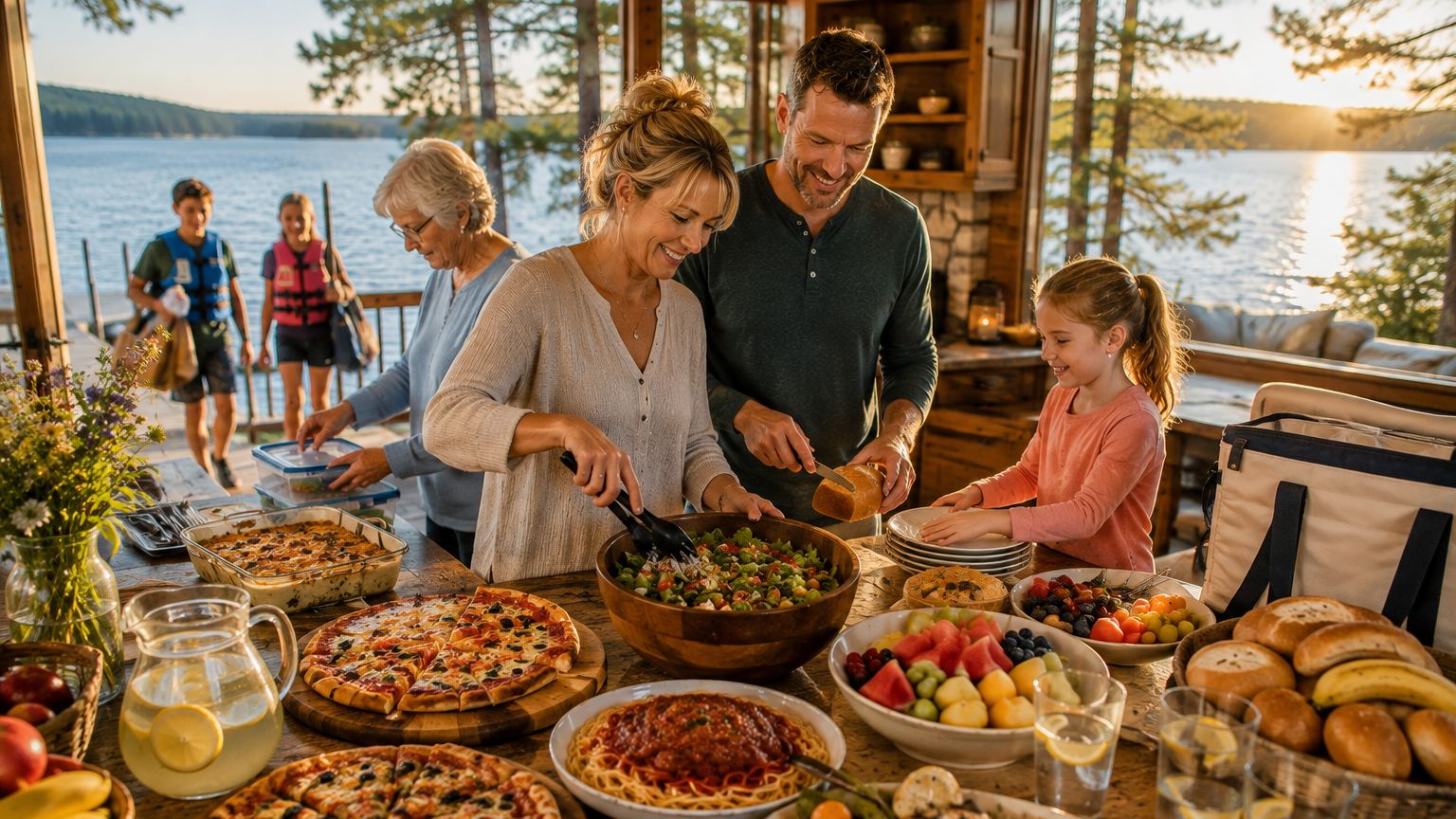
These easy cabin meals are designed for the familiar moment when the cars arrive, the coolers open and everyone immediately wants to know what is for dinner.
Table of Contents – Easy Cabin Meals
The Cabin Is Full, and Everyone Is Hungry
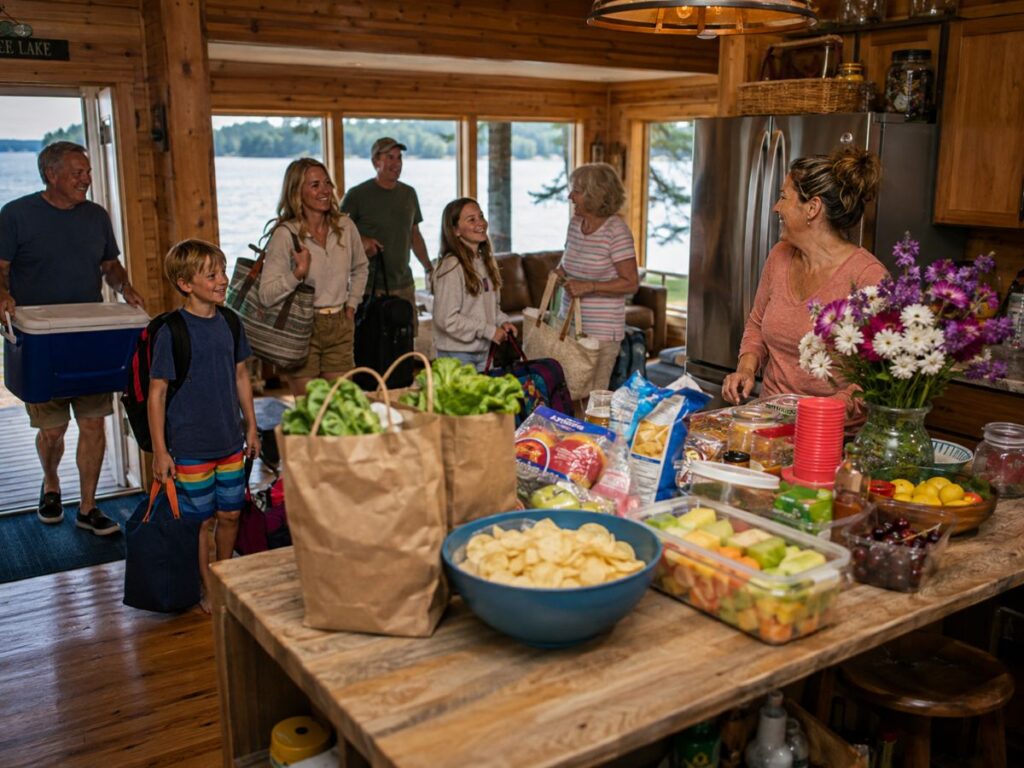
Cabins have a way of making people hungry. Maybe it is the lake air. Maybe it is the swimming, hiking, and hauling coolers. Or maybe guests assume the person who owns the cabin also operates a 24-hour restaurant.
Feeding a full house can be part of the fun. It can also leave the host indoors while everyone else is sitting on the dock, taking out the boat or starting a campfire.
The answer is not a weekend of complicated recipes. It is a short list of dependable meals that feed several people, use familiar ingredients, and do not require every pan in the kitchen.
Cabin Cook’s Rule: A good meal should not take longer to clean up than it took everyone else to eat it.
The best cabin meals share a few qualities:
- They feed adults and children.
- They are easy to expand.
- They allow people to eat at different times.
- They use the grill, oven, slow cooker or campfire.
- They create useful leftovers.
- They do not keep the host in the kitchen all weekend.
Before shopping, check the cabin kitchen. Make sure you have a large skillet, stockpot, sharp knife, baking sheet, serving bowls, food-storage containers and a working grill.
Most important, check the propane tank.
Do as much preparation at home as practical. Chop vegetables, brown taco meat, form burger patties and assemble casseroles before leaving. Choose ingredients that can appear in more than one meal, such as shredded cheese, tortillas, onions, peppers and cooked sausage.
Also bring one emergency meal. Frozen pizza, soup, sandwiches or boxed macaroni and cheese can rescue a rainy evening, a late arrival or a boat ride that lasted two hours longer than planned.
With the basics handled, these 10 easy cabin menus can feed the family without turning the host into unpaid kitchen staff.
1. Taco Night Handles Late Arrivals
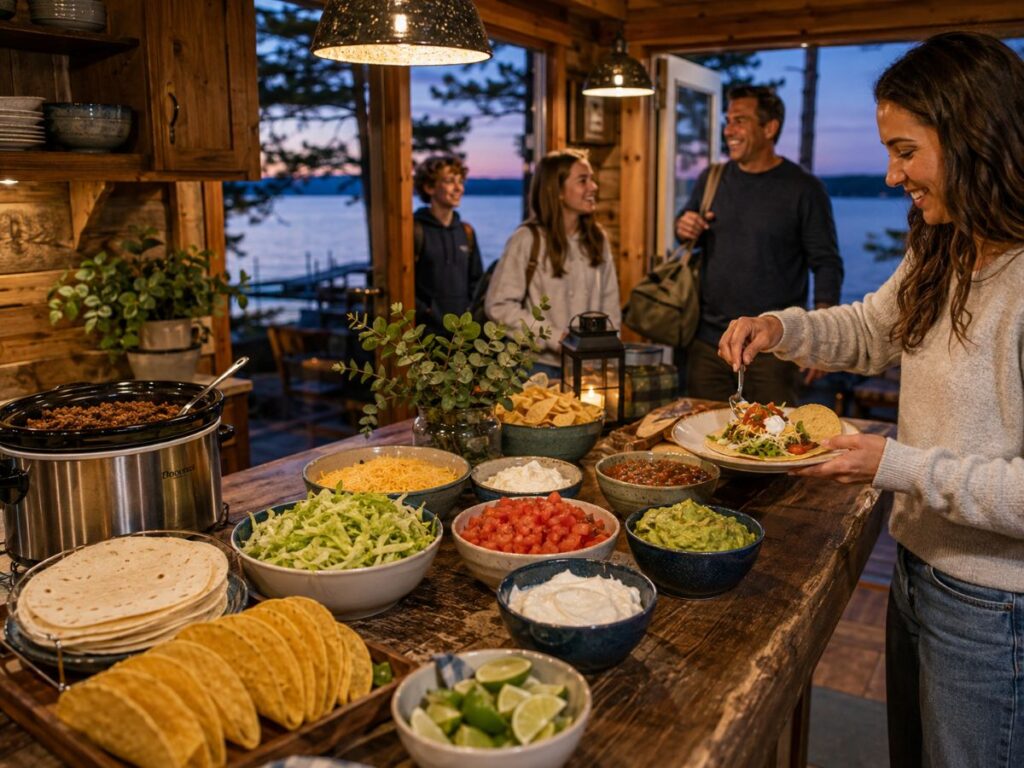
Family members rarely arrive at the cabin at the same time.
One car pulls in before dinner. Another appears after sunset. Someone sends a text saying they are 20 minutes away, which usually means an hour.
Taco night handles all of it.
The food can stay warm, toppings can remain refrigerated, and each person can build a plate when they arrive. Children can stick with meat and cheese, while adults can add enough salsa and hot sauce to make the next morning memorable.
Put Out:
- Seasoned ground beef or shredded chicken
- Soft tortillas and crunchy shells
- Lettuce and tomatoes
- Shredded cheese
- Salsa and sour cream
- Black beans
- Guacamole
- Tortilla chips
Cabin Shortcut: Cook the meat at home and reheat it in a slow cooker.
Keep the toppings in separate containers. Leftovers can become breakfast burritos, quesadillas, nachos or taco salad.
Taco night is flexible, familiar and hard to ruin. That makes it a strong first meal when arrival times remain loose.
2. Breakfast Casserole Ends Griddle Duty
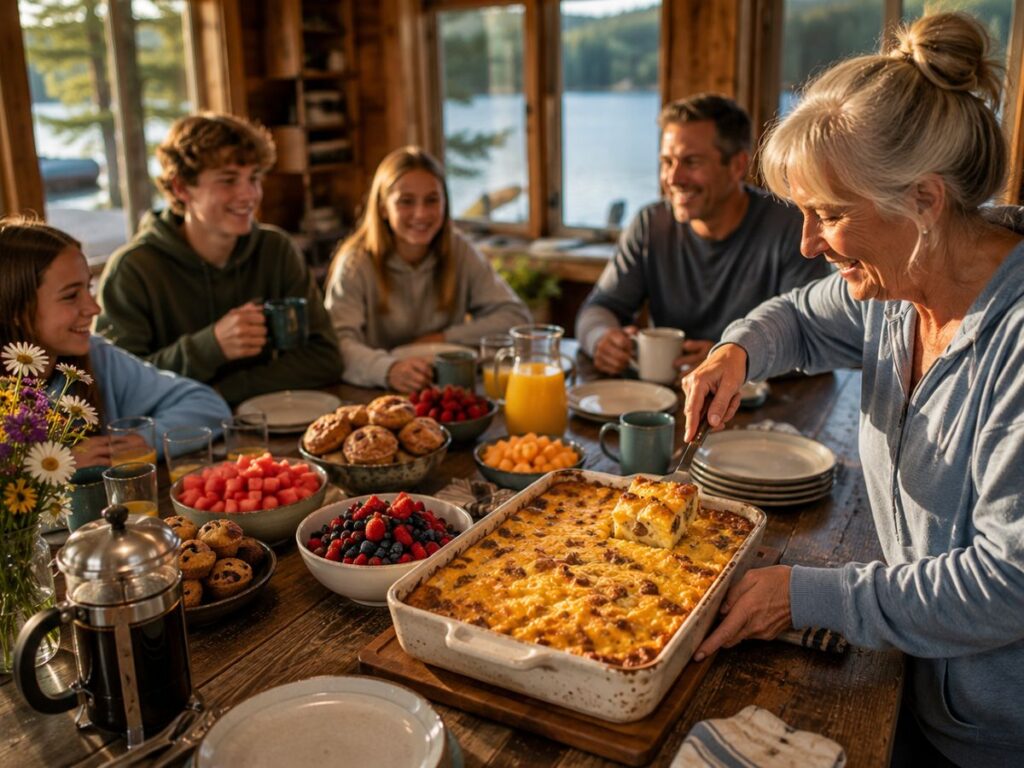
Cabin mornings happen in shifts.
Early risers are awake before sunrise. Children appear when they smell bacon. One person drinks coffee for an hour before considering food. Another wanders in near noon and asks whether breakfast is over.
A breakfast casserole works for all of them.
Combine eggs, sausage, frozen hash browns, cheese and milk in one baking dish. Assemble it the night before, refrigerate it and bake it in the morning.
Serve It With:
- Fresh fruit
- Muffins or cinnamon rolls
- Toast
- Coffee
- Juice
Set out salsa, ketchup, and hot sauce so guests can season their own plates.
Make-Ahead Hint: A 9-by-13-inch casserole generally feeds eight to 10 people when served with fruit and baked goods.
For a larger group, make one sausage casserole and one vegetable or cheese version. Leftover pieces can be wrapped in tortillas or reheated for a quick breakfast the next day.
This meal avoids the usual trap of frying eggs one plate at a time while everyone else watches.
3. Burgers, Brats and Sweet Corn Never Need Explaining
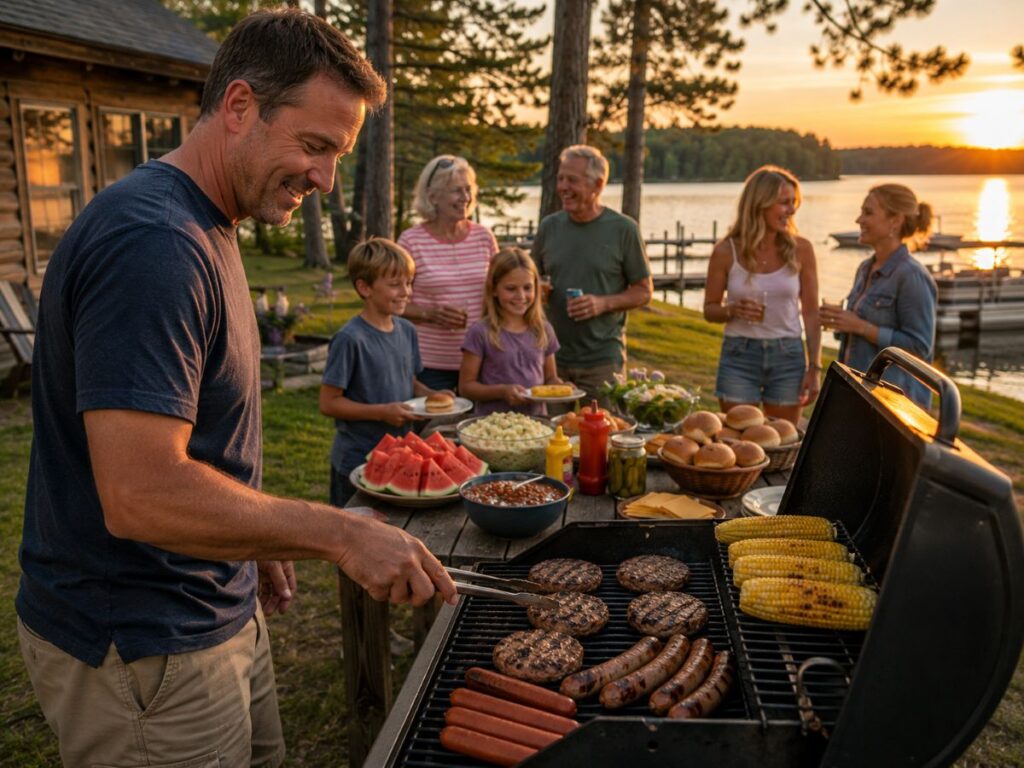
Some meals simply belong at the cabin.
Burgers, bratwurst and sweet corn are familiar, easy to serve and suited for paper plates. Most of the cooking happens outside, where the grill cook can still be part of the conversation.
Build the Menu With:
- Hamburgers
- Bratwurst
- Hot dogs
- Sweet corn
- Potato salad
- Watermelon
- Pickles
- Chips
- Baked beans
Set out ketchup, mustard, relish, cheese, onions, lettuce and tomatoes before the meat comes off the grill.
Hosting Hint: Hungry guests tend to gather around a grill like gulls near a fishing boat. Keep the serving area away from the cook.
Form burger patties at home and place them between sheets of wax paper. Brats can be simmered ahead in beer, broth or water, then finished on the grill.
There is no shame in deli potato salad, bakery buns or chips from a bag. Leftover brats can be sliced into eggs, pasta or breakfast potatoes.
4. Slow-Cooker Pulled Pork Waits for Everyone
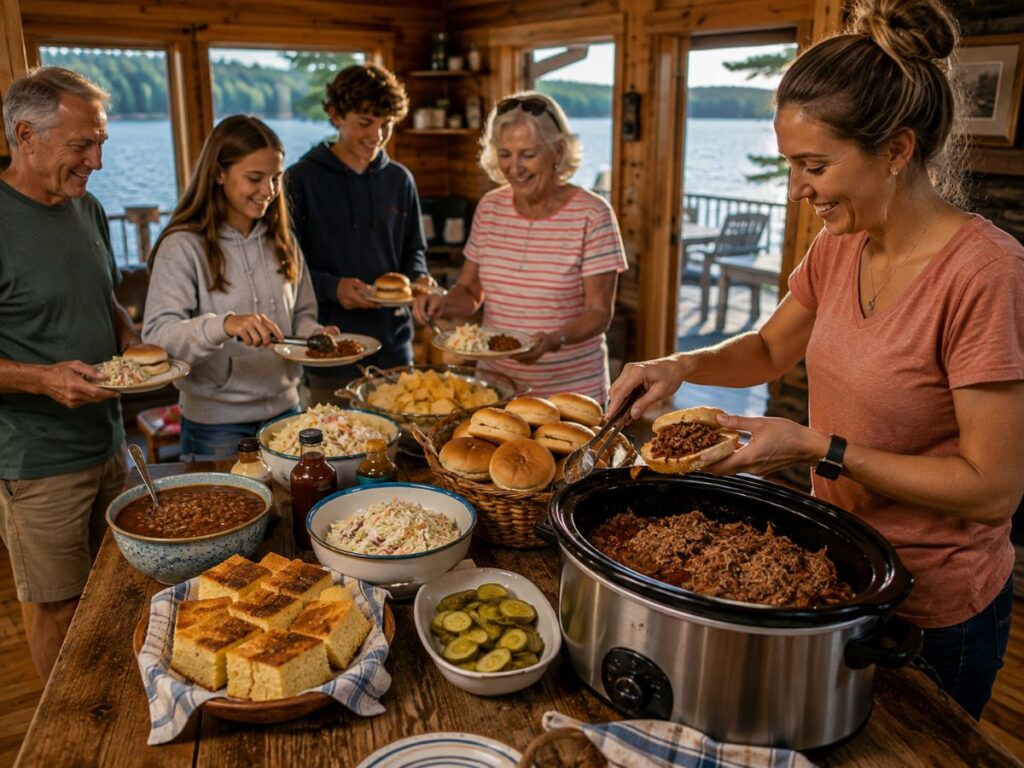
A good cabin meal should fit the day, not control it.
Pulled pork can remain warm while guests swim, golf, fish or debate whether the clouds look serious enough to come inside. When everyone is ready, dinner is already waiting.
Serve Pulled Pork With:
- Sandwich buns
- Coleslaw
- Baked beans
- Pickles
- Cornbread
- Chips
- Apple crisp or cookies
A pork shoulder works well because it stays moist during slow cooking. Season it simply with salt, pepper, garlic, onion and barbecue seasoning.
Cabin Shortcut: Cook and shred the pork at home. Reheat it at the cabin with a small amount of broth or apple juice.
Let guests build their own sandwiches. Some will put slaw on top. Others will insist it belongs beside the sandwich. Cabin weekends are not the time to settle this dispute.
Extra pork can become nachos, quesadillas, baked potato toppings, pizza or breakfast hash.
5. Pizza Night Makes Dinner the Activity
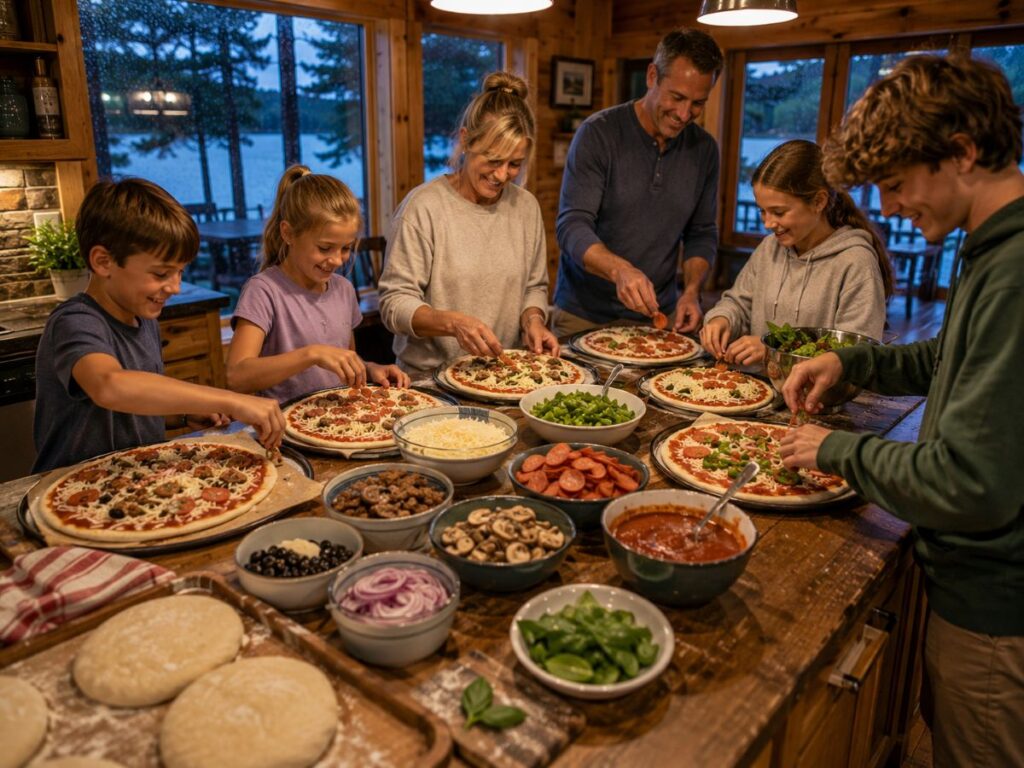
Pizza night solves two problems.
It feeds the group, and it gives everyone something to do when rain cancels the campfire or wind keeps the boat tied to the dock.
Use premade crusts, naan, flatbreads or pita bread. Personal pizzas cook faster and reduce arguments about toppings.
Set Out:
- Pizza sauce
- Shredded mozzarella
- Pepperoni
- Cooked sausage
- Mushrooms
- Peppers and onions
- Black olives
- Pineapple
- Fresh basil
Kitchen Hint: Mark each pizza with the cook’s initials on a small piece of foil. This helps identify who built the one covered with olives.
Use sheet pans if the cabin lacks a pizza stone. Avoid loading on too much sauce or too many wet vegetables, which can leave the center soft.
Extra slices make an easy lunch. Leftover toppings can go into scrambled eggs, pasta or sandwiches.
Pizza night is casual, social and hard to take too seriously. That is why it works.
6. Foil-Packet Dinners Keep Cleanup Small
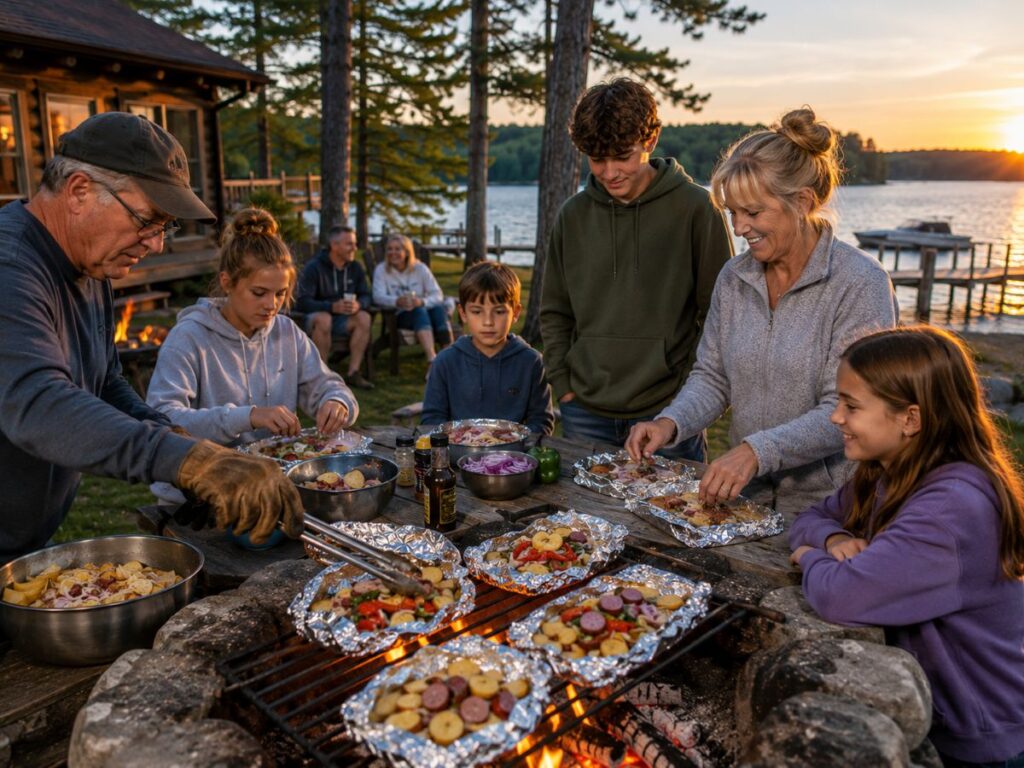
Foil-packet dinners offer the kind of meal people picture when they think about cabin life.
There is a fire, food cooking over hot coals, and the smell of onions, potatoes, and meat drifting through the trees. Cleanup mostly involves folding up the foil.
Choose ground beef, chicken, smoked sausage, fish, or a meatless option.
Add Vegetables Such As:
- Thinly sliced potatoes
- Carrots
- Onions
- Peppers
- Green beans
- Zucchini
- Corn
Use heavy-duty foil and leave a little room inside each packet for steam. Write names on the foil before cooking.
This prevents confusion when one packet contains extra onions and another belongs to a child who considers onions a personal attack.
Safety Callout: Cook packets over hot coals or a medium grill, not open flames. Chicken should reach 165 degrees and ground beef 160 degrees.
Serve the packets with rolls, salad, watermelon or s’mores.
Leftover meat and vegetables can become breakfast hash, soup or wraps.
7. A Great Lakes Fish Fry Gives the Weekend Local Flavor
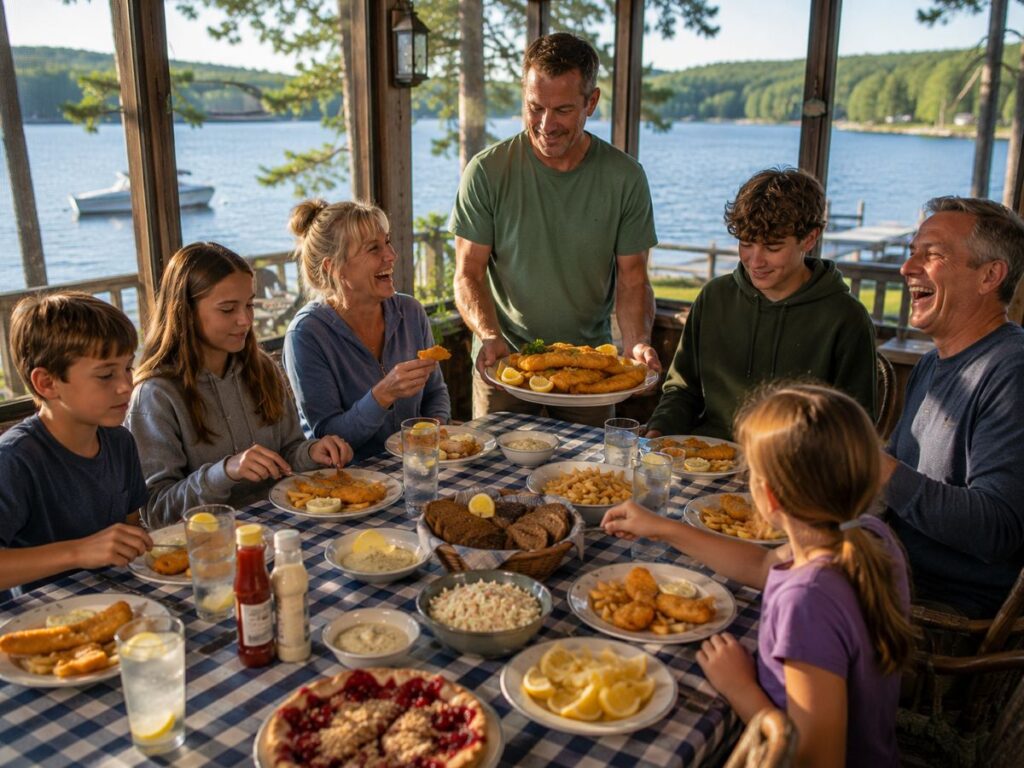
Few meals feel more at home near a Great Lakes shoreline than a fish fry.
The fish may come from a morning on the water, a local market or the grocery store freezer. What matters is serving it hot, crisp and with enough tartar sauce.
Perch and walleye are natural choices, but cod, haddock, bluegill or another mild fish can also work.
Complete the Meal With:
- French fries or roasted potatoes
- Coleslaw
- Tartar sauce
- Lemon wedges
- Rye bread or rolls
- Pickles
- Cherry pie or cherry crisp
Offer chicken strips for guests who do not eat fish.
Cabin Cook’s Rule: Never assume everyone loves fish simply because the cabin is near water.
Fish may be fried, baked, grilled or air-fried. An outdoor fryer keeps heat, grease and cooking odors outside. See Thumbwind’s article on how to prepare perfectly fried walleye.
Have the side dishes ready before cooking begins. Fish should be served quickly while the coating remains crisp.
Leftover fish can become tacos, sandwiches or fish cakes the next day.
8. Sheet-Pan Chicken Uses One Pan and Little Patience
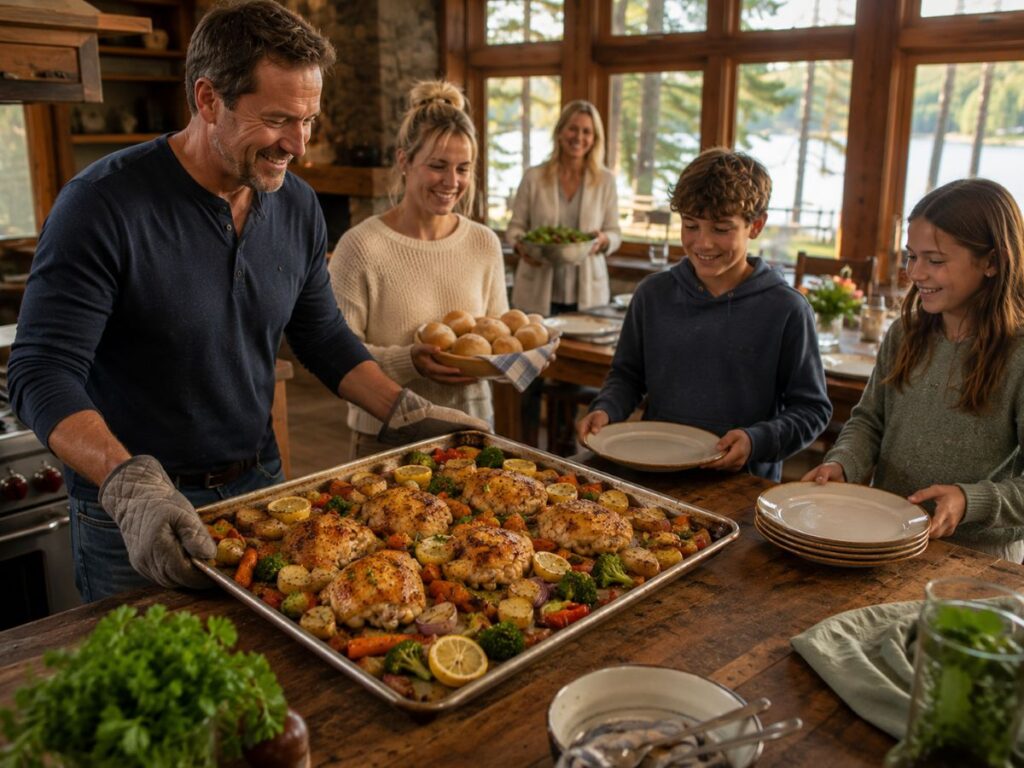
There comes a point in every cabin weekend when the cook wants a real dinner but has no interest in creating a real mess.
That is when sheet-pan chicken earns its place.
Chicken, potatoes and vegetables roast together in the oven. The meal requires little attention and leaves one main pan to wash.
Use:
- Chicken thighs or breasts
- Baby potatoes
- Carrots
- Broccoli
- Green beans
- Peppers
- Onions
Season everything with olive oil, salt, pepper, garlic, paprika and lemon juice. Ranch seasoning, barbecue rub or honey mustard also work.
Cabin Shortcut: Use baby potatoes and precut vegetables to reduce chopping.
Avoid crowding the pan. When vegetables are packed too closely, they steam instead of browning. Use two pans for a larger group.
Check chicken with a food thermometer rather than relying only on the clock.
Leftover chicken can go into wraps, salads, pasta, quesadillas or soup. Extra roasted vegetables work well in eggs or breakfast hash.
9. Spaghetti Night Stretches the Budget
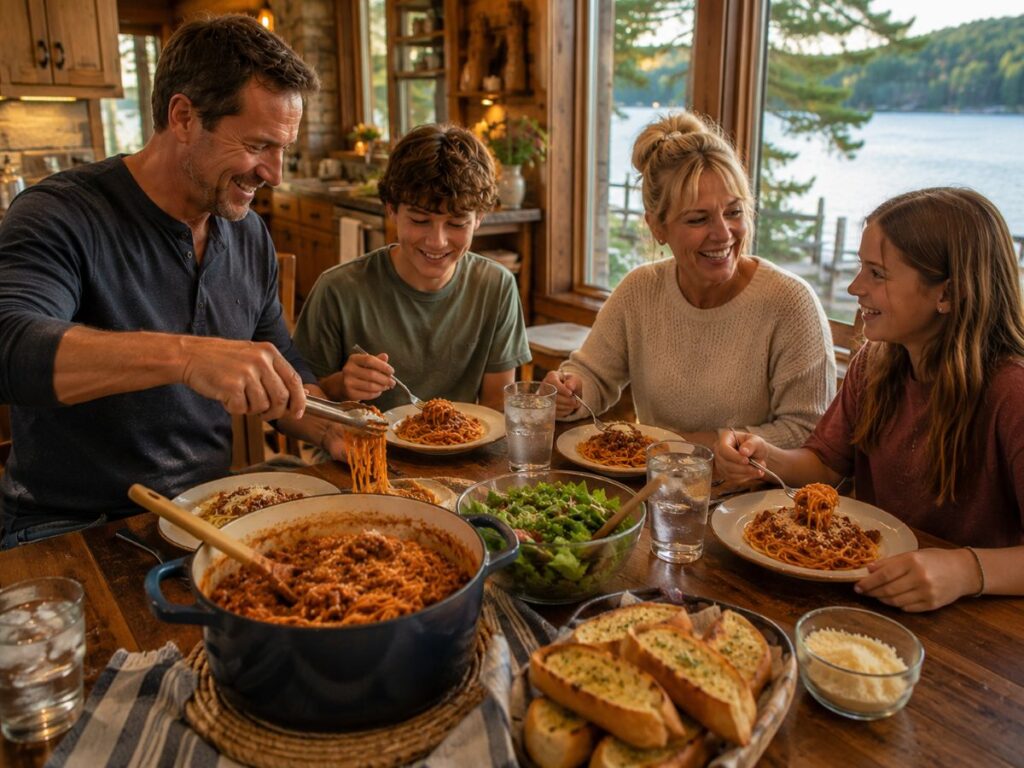
Spaghetti has fed vacation houses, church suppers and hungry families for generations.
It is affordable, familiar and easy to expand when someone unexpectedly brings a cousin, a neighbor or three teenagers who were already nearby.
Serve It With:
- Meat sauce or marinara
- Garlic bread
- Tossed salad
- Parmesan cheese
- Red pepper flakes
- Brownies or cookies
Keep some plain noodles for children who view tomato sauce with deep suspicion.
Cabin Shortcut: Start with jarred sauce and improve it with browned ground beef, sausage, onions, garlic and dried herbs.
Make the sauce at home and reheat it at the cabin. It often tastes better after sitting overnight.
For eight to 10 guests, about 2 pounds of dry pasta usually works when served with salad and bread. Cook two smaller batches if the cabin lacks a large stockpot.
Leftovers can become baked spaghetti with mozzarella. Extra sauce can top meatball sandwiches, pizza or stuffed peppers.
Spaghetti is dependable, filling and generous enough to make an unexpected guest look like part of the plan.
10. Sunday Leftover Brunch Clears the Fridge
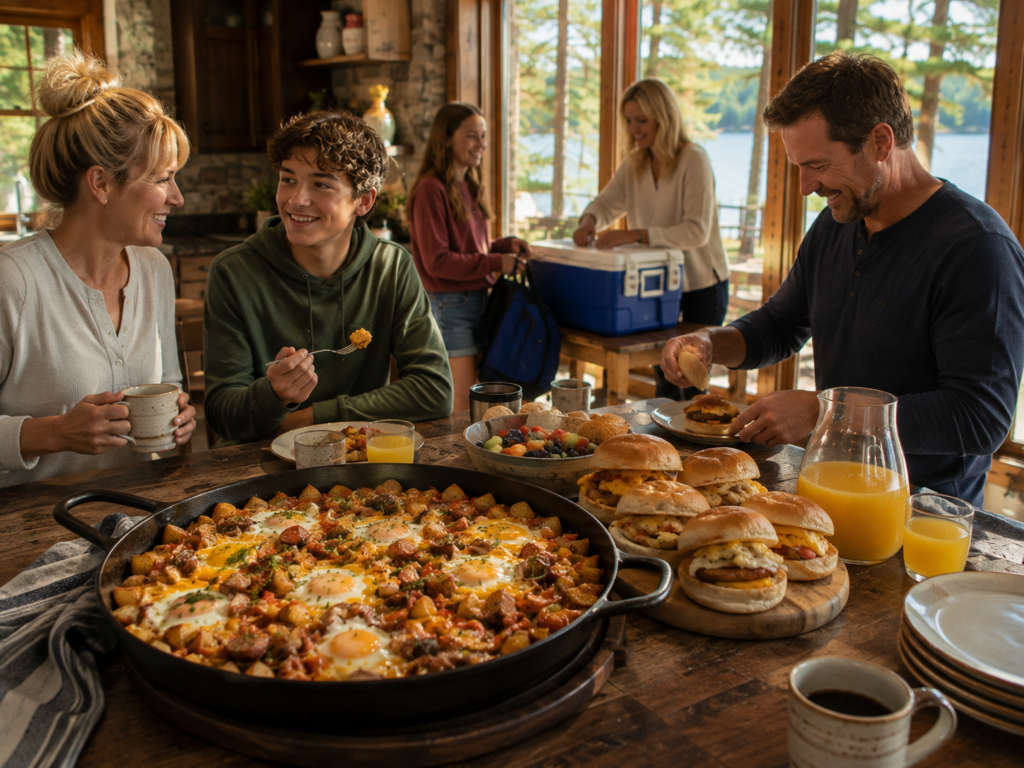
The final cabin meal should not create another mountain of dishes.
By Sunday morning, the refrigerator usually holds a little of everything: half a package of buns, two cooked brats, extra cheese, grilled vegetables and one container nobody remembers packing.
This is not clutter. It is brunch.
Use Leftovers for:
- Scrambled eggs
- Breakfast sandwiches
- Breakfast burritos
- Skillet potatoes
- Sausage and vegetable hash
- Toast or leftover rolls
- Fresh fruit
- Muffins
A large breakfast skillet can use several leftovers at once. Start with cooked potatoes, then add chopped sausage, onions, peppers, vegetables, pork or corn. Finish with eggs and cheese.
Sunday Rule: When nobody remembers when something was cooked or how long it sat outside, throw it away.
Set out sandwich ingredients buffet-style so guests can eat while packing.
Offer remaining food to family members before they leave. Put take-home containers beside the coolers or near the door so they do not remain forgotten in the refrigerator.
Keep Cabin Lunches Simple
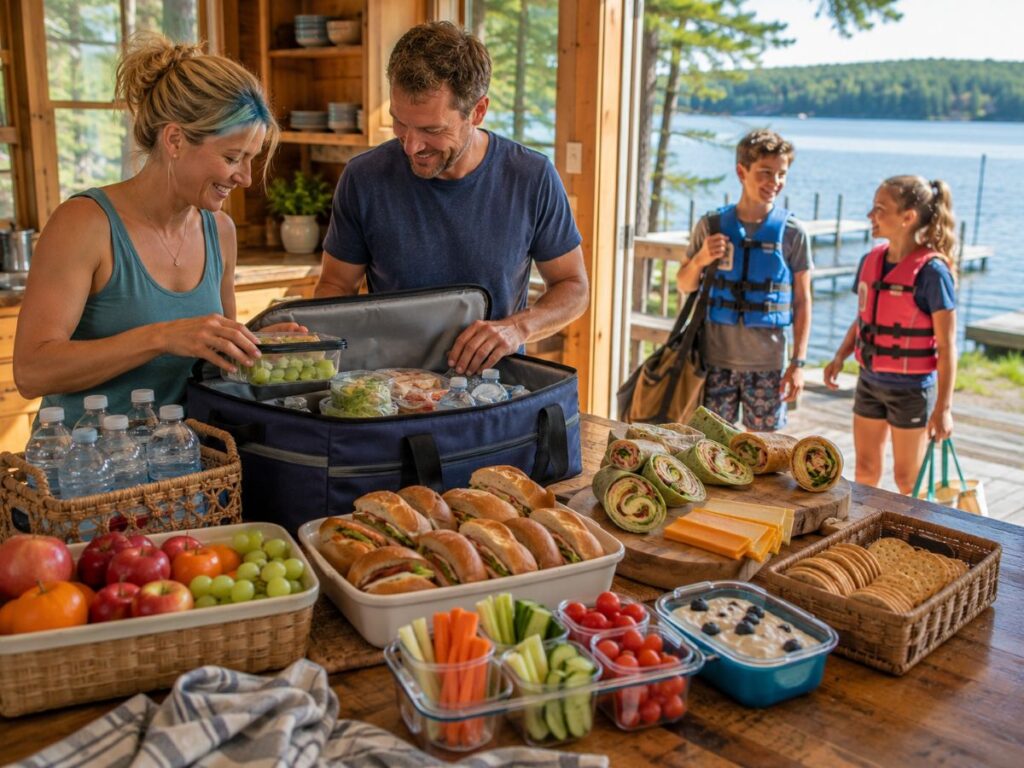
Lunch should not become another production.
People may be swimming, boating, golfing, shopping or working through a serious afternoon nap. Keep several self-serve choices available and let guests eat when they are ready.
Stock the Cabin With:
- Sandwich meat and cheese
- Peanut butter and jelly
- Bread and tortillas
- Crackers
- Hot dogs
- Leftover pizza
- Fresh fruit
- Vegetable trays
- Yogurt
- Granola bars
- Chips and salsa
Group lunch supplies together in the refrigerator. Otherwise, guests may stare inside for 10 minutes before asking where the cheese is.
For the beach or boat, pack sandwiches, apples, grapes, crackers, pretzels and cheese sticks. Use insulated bags and ice packs for meat and dairy products.
Set aside one basket or shelf for snacks. A separate drink cooler can also save refrigerator space and reduce kitchen traffic.
Cabin Snack Rule: Put popular items where everyone can see them. Hide anything reserved for a future meal.
Shopping List Generator
Cabin Meal Planner
Select the meals you want to serve, enter the number of guests and generate one combined shopping list.
Choose Your Meals
Combined Shopping List
Amounts are practical estimates. Adjust for children, large appetites and pantry items already on hand.
Buy Ingredients That Work More Than Once
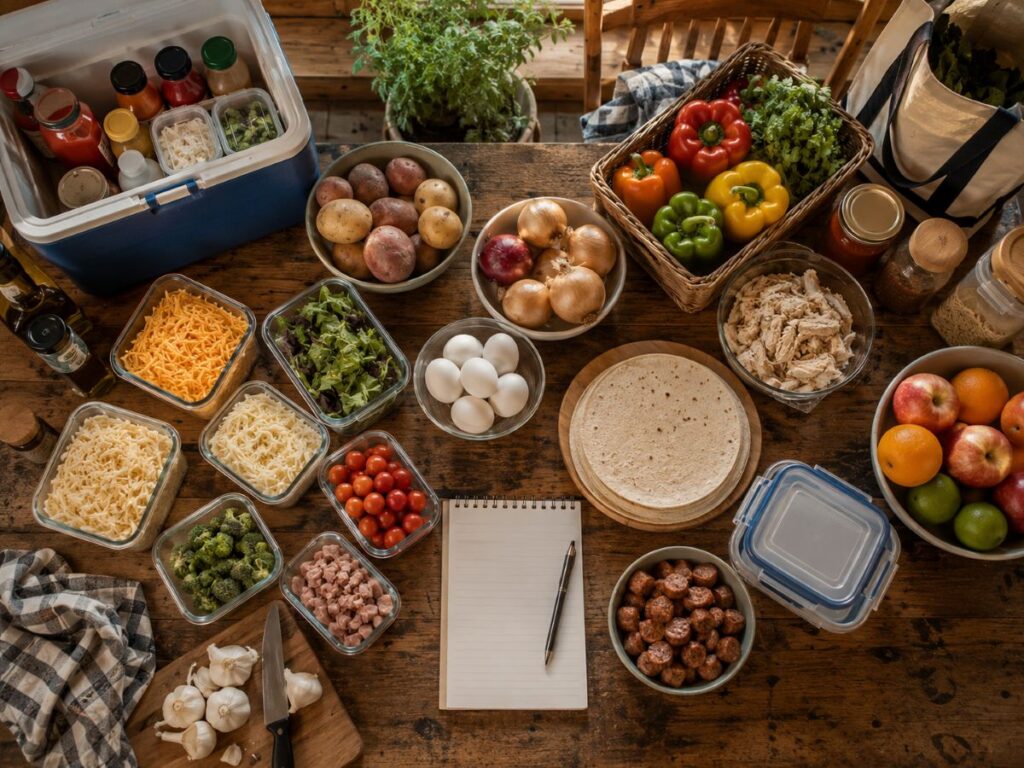
Cabin food costs climb quickly when every meal uses separate ingredients.
Plan around foods that can move from one menu to another:
- Shredded cheese works with tacos, eggs, pizza and potatoes.
- Onions and peppers work in foil packets, omelets and burgers.
- Tortillas become tacos, wraps, quesadillas and breakfast burritos.
- Cooked chicken becomes sandwiches, salads and pasta.
- Potatoes work as a side dish, breakfast hash or foil-packet base.
Keep pantry basics together in one container:
- Cooking oil
- Salt and pepper
- Taco seasoning
- Barbecue sauce
- Ketchup and mustard
- Mayonnaise
- Salsa
- Aluminum foil
- Food-storage bags
Cooler Hint: Freeze meat that will not be used on the first day. It will help keep the cooler cold as it slowly thaws.
Buying ingredients with several uses reduces expense, waste and refrigerator crowding.
Share the Work Without Calling a Meeting
Guests often say, “Let me know if you need anything.”
That offer can disappear the moment dishes reach the sink.
Specific assignments work better.
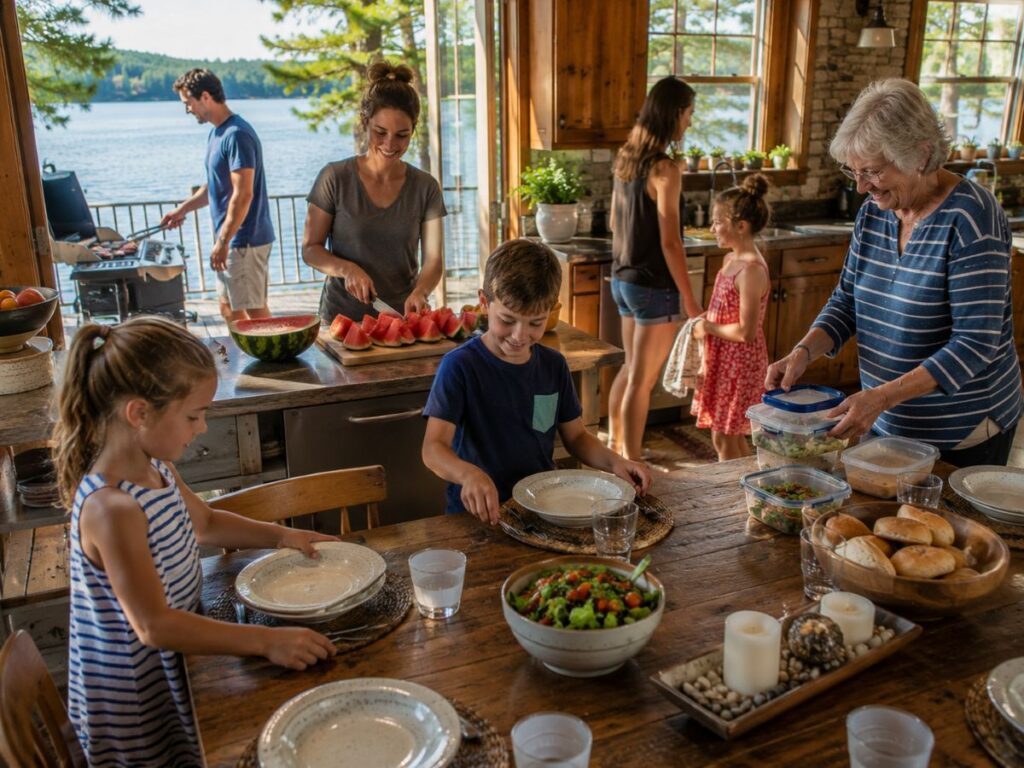
Ask one person to grill, another to prepare salad, and someone else to store leftovers. Children can set the table or carry sealed items outside.
Potluck contributions also help, but assign categories. One family can bring dessert, another fruit, another drinks and another breakfast items.
Without coordination, the cabin may end up with four pans of brownies and nothing that qualifies as dinner.
Host’s Hint: “Could you cut the watermelon?” works better than “Can somebody help?”
The person who cooks should not automatically lead cleanup. Someone else can load the dishwasher, wash the skillet or handle trash and recycling.
Compliments are appreciated. A clean kitchen is better.
Good Food and More Time by the Water
A successful cabin weekend does not require restaurant-level cooking.
It requires meals that are flexible, familiar, and ready when hungry people return from the lake.
Prepare what you can at home. Use ingredients more than once. Let guests serve themselves and give everyone a job. Keep one emergency meal available for the night when the plan falls apart.
Most important, the cook should not miss the weekend.
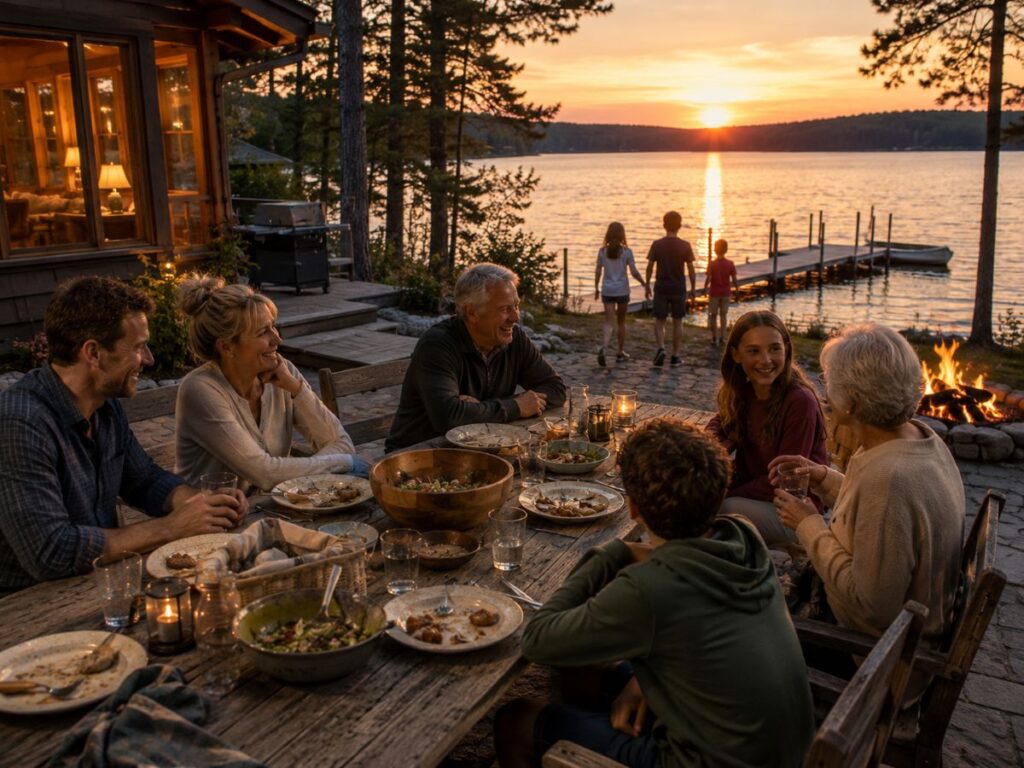
Years later, the family may not remember whether the coleslaw was homemade or the pizza crust came from a package. They will remember the crowded table, the stories, the laughter, and the meals that brought everyone in from the water.