
 by
by Well water taste and odor problems are often the first sign that something has changed in a private well, plumbing system or nearby groundwater. For waterfront property owners, bad-smelling or odd-tasting water should not be ignored, especially after flooding, heavy rain, septic issues or long seasonal shutdowns.
You turn on the kitchen faucet at your lake house and immediately notice a rotten egg smell. Or perhaps your morning coffee suddenly tastes metallic. For waterfront property owners who rely on private wells, unusual tastes and odors are often the first sign that something has changed underground.
In many cases, the cause is harmless. In others, it may indicate contamination, aging equipment, or changes in groundwater conditions. Understanding the source of the problem is the first step toward protecting your water supply and avoiding unnecessary treatment expenses.
Unlike municipal water users, private well owners are responsible for monitoring and maintaining their own water quality. That responsibility becomes even more important when a home is located near a lake, river, bay, or wetland where seasonal water fluctuations can affect groundwater conditions.
Well Water Taste and Odor Problems – Table of Contents
Why Well Water Develops Taste and Odor Problems
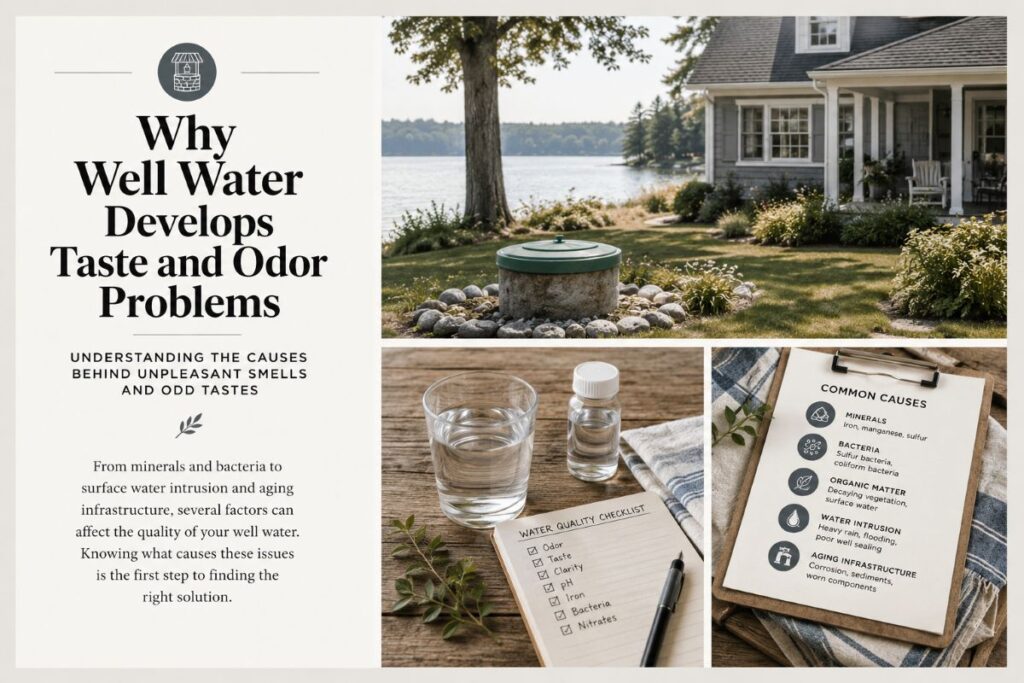
Water naturally dissolves minerals, gases, and organic matter as it moves through soil and rock. Changes in groundwater chemistry, well construction, nearby land use, and plumbing systems can all affect how water smells and tastes.
Taste and odor issues generally fall into four categories:
- Naturally occurring minerals
- Bacteria and biological activity
- Surface water contamination
- Plumbing or water treatment equipment problems
While many taste and odor issues are unpleasant but harmless, some can indicate conditions that require immediate testing.
Quick Reference Guide: Well Water Taste and Odor Problems
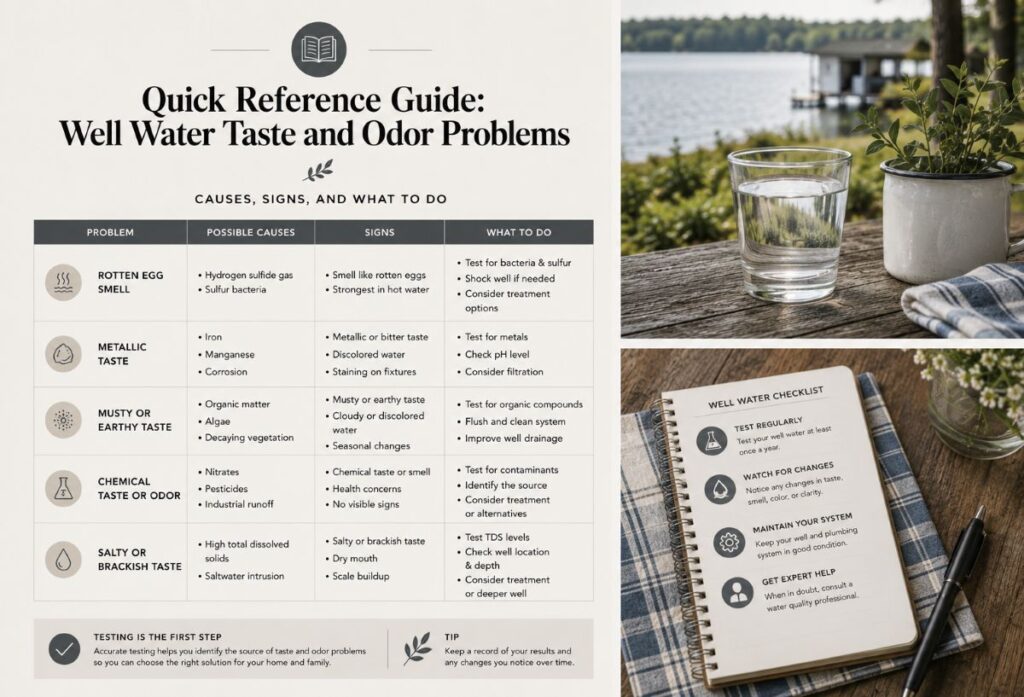
Quick Reference Guide: Well Water Taste and Odor Problems
Use this guide to match common well water smells and tastes with likely causes, recommended tests and possible treatment options.
Rotten Egg Smell
Usually Low Risk- Likely cause: Hydrogen sulfide or sulfur bacteria
- Recommended test: Sulfide and bacteria testing
- Typical solution: Aeration, oxidation filter or shock chlorination
Metallic Taste
Usually Low Risk- Likely cause: Iron, manganese or corroding plumbing
- Recommended test: Iron, manganese and pH panel
- Typical solution: Iron filter, oxidation system or plumbing repair
Musty or Earthy Odor
Moderate Risk- Likely cause: Organic matter or surface water intrusion
- Recommended test: Coliform bacteria and nitrate testing
- Typical solution: Well inspection, casing repair or treatment system
Salty Taste
Moderate Risk- Likely cause: Sodium, chloride, road salt or softener problems
- Recommended test: Sodium, chloride and TDS testing
- Typical solution: Reverse osmosis or source investigation
Fishy Smell
Moderate Risk- Likely cause: Bacterial growth or organic contamination
- Recommended test: Bacteria and organic compounds panel
- Typical solution: Disinfection, filtration or well maintenance
Sewage Odor
High Risk- Likely cause: Septic contamination or damaged well casing
- Recommended test: E. coli, coliform, nitrate and nitrite testing
- Typical solution: Stop drinking, test immediately and contact a professional
Rotten Egg Smell: The Most Common Complaint
What It Smells Like
A strong sulfur or rotten egg odor.
Most Likely Cause
Hydrogen sulfide gas dissolved in groundwater.
Other Possible Causes
- Sulfur-reducing bacteria
- Water heater reactions
- Decaying organic matter in groundwater
Potential Health Concerns
Hydrogen sulfide is usually more of a nuisance than a health hazard at levels commonly found in residential wells. However, extremely high concentrations can affect indoor air quality.
Recommended Testing
- Hydrogen sulfide
- Sulfate
- Total coliform bacteria
- Unspecified water contaminants
Typical Solutions
- Aeration systems
- Oxidizing filters
- Shock chlorination
- Water heater maintenance
For waterfront properties, sulfur odors often become more noticeable during warm weather when biological activity increases in shallow groundwater.
Metallic Taste
What It Tastes Like
Water tastes like pennies, iron, or metal.
Most Likely Causes
- Iron in groundwater
- Manganese
- Corroding plumbing
Potential Health Concerns
Iron and manganese are generally nuisance contaminants but can cause staining and affect water quality.
Recommended Testing
- Iron
- Manganese
- pH
- Corrosion indicators
Typical Solutions
- Iron filters
- Oxidation systems
- Plumbing upgrades
Properties located in former glacial regions around the Great Lakes frequently encounter naturally elevated iron levels.
Musty, Earthy, or Moldy Taste
What It Tastes or Smells Like
Wet leaves, damp soil, or mold.
Most Likely Causes
- Algae compounds
- Organic matter
- Surface water intrusion
Potential Health Concerns
This can indicate that surface water is entering the well system.
Recommended Testing
- Coliform bacteria
- Nitrate
- Well inspection
Typical Solutions
- Improve well sealing
- Repair well casing
- Install treatment systems
This issue is especially common in older waterfront homes with shallow wells.
Salty Water
What It Tastes Like
Noticeably salty or brackish.
Most Likely Causes
- Natural mineral deposits
- Road salt infiltration
- Water softener problems
Potential Health Concerns
High sodium may be a concern for people on sodium-restricted diets.
Recommended Testing
- Sodium
- Chloride
- Total dissolved solids (TDS)
Typical Solutions
- Reverse osmosis systems
- Water softener inspection
- Source investigation
Properties near roads, driveways, and heavily salted winter areas often experience elevated chloride levels.
Fishy Odors
What It Smells Like
Fish, seafood, or decaying marine life.
Most Likely Causes
- Organic contamination
- Bacterial growth
- Naturally occurring compounds reacting with chlorine
Recommended Testing
- Bacterial testing
- Organic compounds
- Water chemistry panel
Typical Solutions
- Disinfection
- Well maintenance
- Treatment upgrades
Sewage or Wastewater Odors
What It Smells Like
Sewage, septic waste, or strong organic decay.
Potential Causes
- Failing septic systems
- Surface contamination
- Damaged well casing
Health Concerns
This situation requires immediate attention and testing.
Recommended Testing
- Total coliform bacteria
- E. coli
- Nitrate
- Nitrite
Immediate Action
Avoid drinking the water until laboratory results confirm safety.
When a Bad Taste Is More Than a Sensory Issue
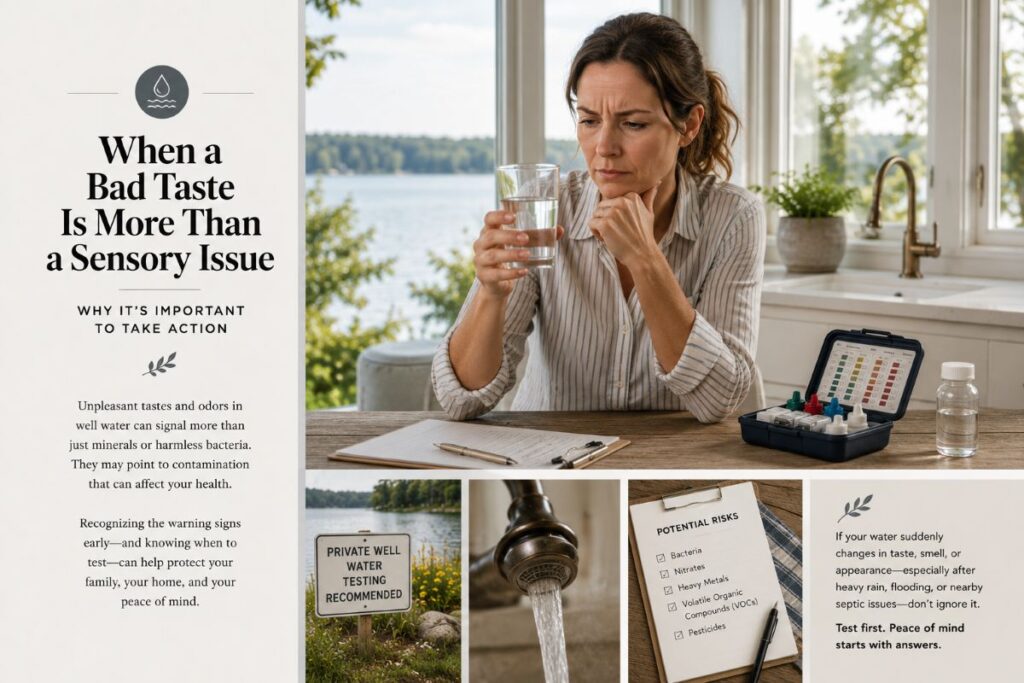
Contact a certified laboratory promptly if:
- Taste or odor changes suddenly
- Water becomes cloudy
- Family members experience gastrointestinal illness
- Flooding has occurred near the well
- The well is located near a septic system
- Surface water enters the well area
A bad smell may simply be sulfur. However, it can also be the first warning sign of contamination.
Practical Troubleshooting Steps Before Calling a Water Treatment Company
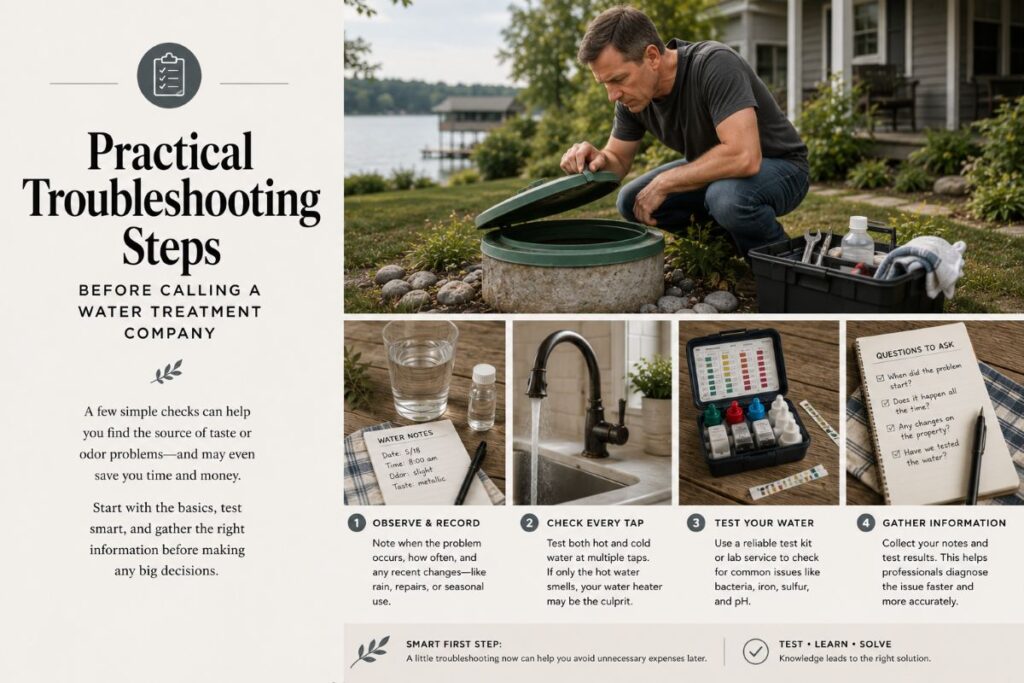
Before spending thousands of dollars on equipment, take these steps:
1. Determine Whether Hot or Cold Water Is Affected
If the smell appears only in hot water, the water heater may be responsible.
2. Compare Multiple Faucets
Check several fixtures throughout the house.
3. Review Recent Changes
Consider:
- Heavy rainfall
- Flooding
- Nearby construction
- New agricultural activity
4. Inspect the Wellhead
Look for:
- Cracked caps
- Standing water
- Animal activity
- Missing seals
5. Test Before Treating
Never purchase treatment equipment without identifying the source of the problem first.
Common Well Water Issues Around the Great Lakes Region
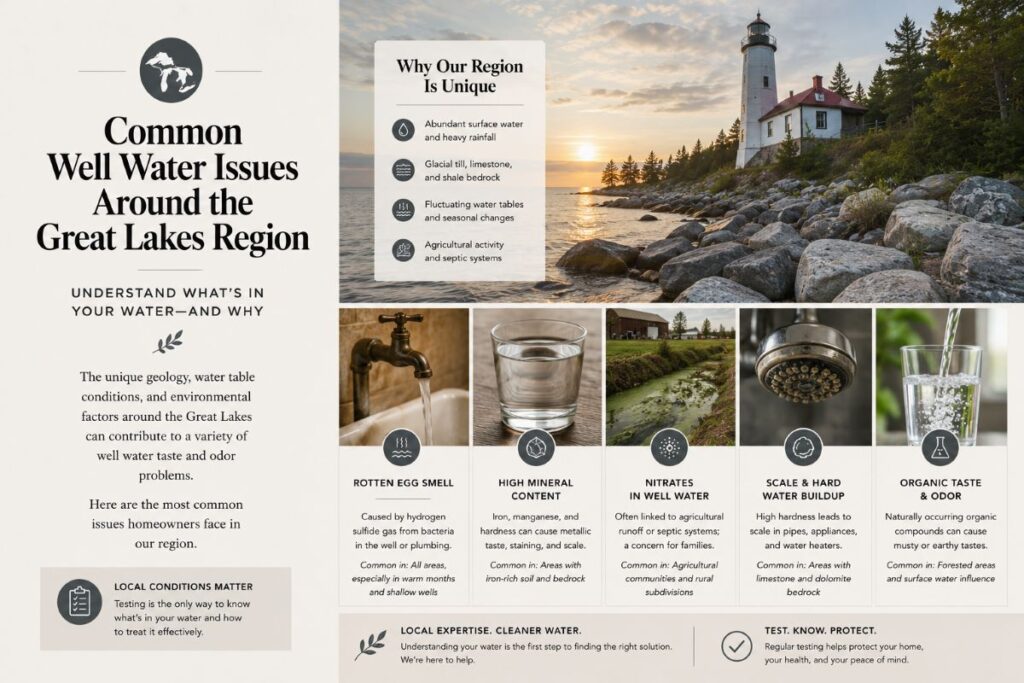
Waterfront property owners often face challenges that differ from inland homeowners.
Iron and Manganese
Common throughout Michigan, Wisconsin, Minnesota, and parts of Ontario.
Sulfur Bacteria
Frequently found in shallow groundwater systems.
Agricultural Runoff
Can affect wells near farmland through nitrate contamination.
Seasonal Water Table Changes
Lake levels and seasonal precipitation can influence groundwater quality.
Older Shoreline Wells
Many cottages and seasonal homes still rely on wells installed decades ago under standards that would not meet current construction requirements.
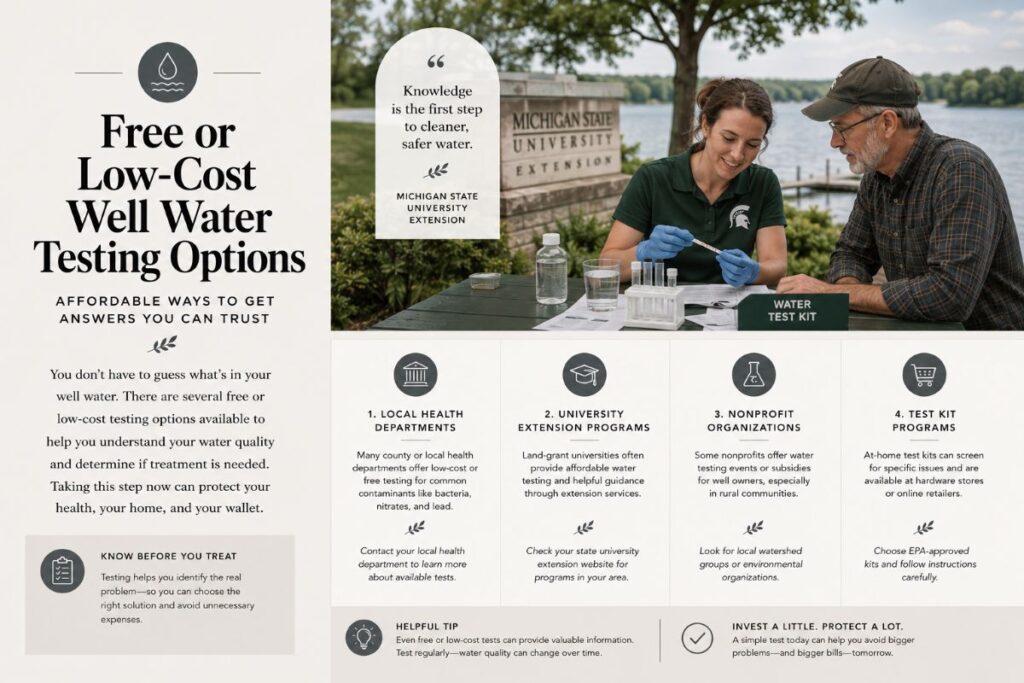
Free or Low-Cost Well Water Testing Options
Frequently Asked Questions For Poor Tasting or Odorus Well Water
Is smelly well water always unsafe?
No. Many odor issues result from naturally occurring minerals. Testing is the only way to know for certain.
How often should waterfront property owners test well water?
At least annually, with additional testing after flooding, repairs, or sudden changes in water quality.
Why does my water smell worse in summer?
Warmer temperatures increase biological activity and can affect groundwater chemistry.
Can lake water seep into my well?
Yes, particularly if the well is shallow, poorly sealed, or located near shorelines.
Does a water softener remove odors?
Not usually. Odors often require separate treatment systems.
Can iron cause a bad taste?
Yes. Iron commonly creates a metallic taste and reddish staining.
Should I shock chlorinate my well every year?
Only when recommended by a qualified professional or after confirmed bacterial contamination.
What is the first test I should order?
A comprehensive well water analysis that includes bacteria, nitrate, pH, minerals, and common contaminants.
Sources Consulted For Well Water Taste and Odor Problems
Works Cited
- Bhakta, Bindu. “Protect the Water Quality of Your Water Well.” Michigan State University Extension, 2 June 2024. Accessed 9 June 2026.
- Centers for Disease Control and Prevention. “Guidelines for Testing Well Water.” CDC. Accessed 9 June 2026.
- Centers for Disease Control and Prevention. “Well Water Safety.” CDC. Accessed 9 June 2026.
- Cornell Cooperative Extension Delaware County. “Well Water.” Cornell Cooperative Extension, 27 Jan. 2025. Accessed 9 June 2026.
- Cornell Cooperative Extension Ontario County. “Well Water Sampling Program.” Cornell Cooperative Extension, 22 Dec. 2025. Accessed 9 June 2026.
- Illinois State Water Survey. “Home Water Testing.” University of Illinois Prairie Research Institute. Accessed 9 June 2026.
- Indiana Department of Health. “Sulfates & Sulfides in Well Water.” State of Indiana. Accessed 9 June 2026.
- Minnesota Department of Agriculture. “Water Testing for Nitrate.” Minnesota Department of Agriculture. Accessed 9 June 2026.
- Minnesota Department of Health. “Iron Bacteria in Well Water.” Minnesota Department of Health, 7 Jan. 2026. Accessed 9 June 2026.
- Pennsylvania Department of Health. “Well Water.” Commonwealth of Pennsylvania. Accessed 9 June 2026.
- Penn State Agricultural Analytical Services Laboratory. “Drinking Water Testing.” Penn State College of Agricultural Sciences. Accessed 9 June 2026.
- Purdue Extension. “Water Quality.” Purdue Extension. Accessed 9 June 2026.
- Purdue Extension. “How to Take a Water Sample.” Purdue Extension. Accessed 9 June 2026.
- The Private Well Class. “The Private Well Class.” PrivateWellClass.org. Accessed 9 June 2026.
- University of Minnesota Extension. “Drinking Water Testing Clinic for Private Well Users.” University of Minnesota Extension. Accessed 9 June 2026.
- University of Minnesota Water Resources Center. “Private Well Education Program.” University of Minnesota. Accessed 9 June 2026.
- University of Massachusetts Amherst Center for Agriculture, Food, and the Environment. “Hydrogen Sulfide and Sulfate in Private Drinking Water Wells.” UMass Amherst, 1 June 2007. Accessed 9 June 2026.
- University of Wisconsin-Stevens Point Center for Watershed Science and Education. “Well Water Testing.” University of Wisconsin-Stevens Point. Accessed 9 June 2026.
- University of Wisconsin-Stevens Point Center for Watershed Science and Education. “Water and Environmental Analysis Lab.” University of Wisconsin-Stevens Point. Accessed 9 June 2026.
- U.S. Environmental Protection Agency. “Protect Your Home’s Water.” EPA, 26 Feb. 2026. Accessed 9 June 2026.



https://betterbythelake.com/well-water-taste-and-odor-problems/